2025 Top 10 Solar Street Lights: Ultimate Guide to Sustainable Illumination
As urban centers strive to enhance their sustainability initiatives, solar street lights have emerged as a crucial element in the transition towards greener cities. According to a report by the International Energy Agency (IEA), the adoption of solar street lights can reduce energy consumption by up to 80%, making them a highly efficient lighting alternative for public spaces. As we navigate towards 2025, the integration of innovative technology in solar street lights is expected to propel the market growth, which is forecasted to reach $6.89 billion by 2025, as highlighted in a recent report by Market Research Future.
Experts like Dr. Emily Johnson, a leading scholar in renewable energy solutions, emphasize the transformative potential of solar street lights. She states, “By harnessing solar energy, we can not only illuminate our streets but also pave the way for a sustainable future.” This powerful assertion highlights the dual benefits of adopting solar street lights—not only do they enhance visibility and safety for pedestrians, but they also contribute to reducing carbon footprints and promoting environmentally friendly practices in urban infrastructure. As we present the "2025 Top 10 Solar Street Lights" guide, it becomes essential to explore these advancements that promise to illuminate the path toward sustainability.
Top Features to Look for in Solar Street Lights for Optimal Performance
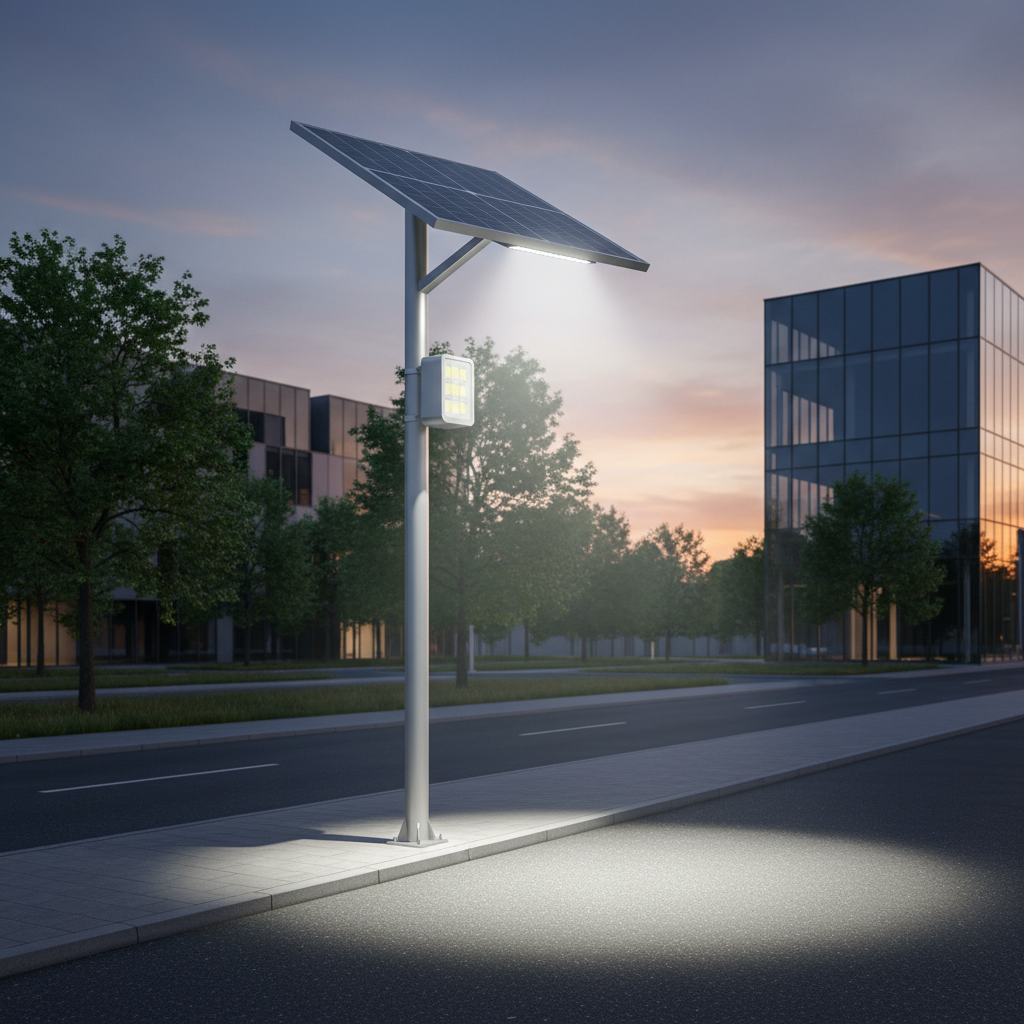
When selecting solar street lights, several key features can enhance their performance and sustainability. Firstly, illumination efficiency is paramount. Look for LED lights with high lumens per watt, as they provide bright, efficient lighting while consuming less energy. Additionally, consider solar panels with higher wattage and conversion rates; this ensures better energy capture during daylight hours, leading to longer operational times after sunset.
Battery capacity and type are also critical. Opt for deep-cycle batteries that can withstand frequent charging and discharging, thereby prolonging the lifespan of the lights. Furthermore, a smart control system can optimize performance by adjusting brightness according to traffic flow or available daylight, enhancing energy savings. Finally, durability and weather resistance are essential features to ensure that the solar street lights can withstand harsh environmental conditions while maintaining functionality over time. Selecting lights with robust materials and proper IP ratings guarantees longevity and reliability, making them a smart investment for sustainable illumination.
Comparative Analysis of the Top 10 Solar Street Lights in 2025
In the evolving landscape of urban infrastructure, solar street lights have emerged as a vital solution for sustainable illumination, especially as cities strive to reduce their carbon footprints. According to a recent report by the International Energy Agency (IEA), global investments in solar energy have surged by over 25% since 2020, highlighting the increasing reliance on renewable energy sources. This trend is further reflected in the solar street lighting sector, where the market is projected to grow at a compound annual growth rate (CAGR) of 20% through 2025. The comparative analysis of the top 10 solar street lights in 2025 will focus on their efficiency, durability, and cost-effectiveness.
Leading the market are models such as the SunMaster S4 and the Sol-Lite Solar Street Light, both of which offer exceptional longevity with LED fixtures rated for over 50,000 hours of use. Efficiency is a key factor, with solar panels capable of converting over 22% of sunlight into electricity, as highlighted in the Solar Energy Industries Association (SEIA) report. Furthermore, these lights integrate smart technology, allowing for adaptive brightness based on real-time environmental conditions. Such innovations not only enhance energy savings but also ensure that communities are illuminated safely and sustainably.
2025 Top 10 Solar Street Lights: Ultimate Guide to Sustainable Illumination
| Model |
Brightness (Lumens) |
Battery Capacity (Ah) |
Charging Time (Hours) |
Operating Time (Hours) |
Solar Panel Type |
IP Rating |
| Model A |
1200 |
18 |
6 |
12 |
Monocrystalline |
IP65 |
| Model B |
1500 |
20 |
7 |
10 |
Polycrystalline |
IP66 |
| Model C |
1000 |
15 |
5 |
8 |
Monocrystalline |
IP67 |
| Model D |
1100 |
17 |
6 |
11 |
A-Si |
IP65 |
| Model E |
1300 |
19 |
8 |
9 |
Monocrystalline |
IP68 |
| Model F |
1400 |
22 |
7 |
10 |
Polycrystalline |
IP66 |
| Model G |
1220 |
16 |
6.5 |
11 |
A-Si |
IP65 |
| Model H |
1250 |
25 |
7.5 |
10 |
Monocrystalline |
IP68 |
| Model I |
1150 |
21 |
5 |
9 |
Polycrystalline |
IP67 |
| Model J |
1280 |
24 |
6 |
10 |
A-Si |
IP66 |
Benefits of Solar Street Lights for Sustainable Urban Development
Solar street lights offer numerous benefits crucial for fostering sustainable urban development. Firstly, they significantly reduce energy consumption by utilizing renewable solar energy, which helps cities lessen their dependency on fossil fuels. This transition is vital as it lowers greenhouse gas emissions, contributing to environmental preservation and combating climate change. Furthermore, solar street lights decrease overall energy costs associated with traditional electric street lighting systems, freeing up funds for other urban infrastructure projects.
Secondly, the installation of solar street lights enhances community safety and visibility without the negative impact of light pollution. By using smart technology, these lights can adjust their brightness based on pedestrian and vehicular movement, ensuring efficient energy use while maintaining adequate illumination levels. Additionally, solar street lights can be deployed in remote areas where extending the electrical grid is impractical, thus enhancing accessibility and safety in underserved neighborhoods. As cities strive to create more sustainable and livable environments, solar street lights present a forward-thinking solution that aligns with global sustainability goals.
2025 Top 10 Solar Street Lights: Sustainability and Performance Comparison
This chart displays the average runtime of the top 10 solar street lights for the year 2025, showcasing their potential for sustainable urban development through efficient energy use.
Cost-Effectiveness of Solar Street Lighting Solutions for Cities
Solar street lighting solutions represent a cost-effective approach for cities aiming to enhance urban lighting while reducing energy expenditures. By harnessing solar energy, municipalities can significantly decrease their reliance on conventional electricity sources, leading to lower utility bills. The initial investment in solar street lights may be higher compared to traditional systems, but the long-term savings on energy costs and maintenance make them an attractive option for city budgets. With advancements in solar technology and battery storage, the efficiency and reliability of these systems have improved, further maximizing their economic benefits.
Moreover, the integration of solar street lighting contributes to sustainability goals by reducing carbon footprints. Cities adopting these solutions often promote a greener image, aligning with modern environmental initiatives and attracting eco-conscious residents and businesses. Additionally, solar lights typically require minimal maintenance due to fewer moving parts and durable materials, allowing city officials to allocate resources to other pressing community needs. This combination of cost-effectiveness and sustainability makes solar street lighting a compelling choice for urban development projects focused on innovation and responsible budgeting.
Innovative Technologies Enhancing Efficiency in Solar Street Lights
The advancement of solar street light technology has transformed urban illumination, making it more efficient and eco-friendly. Innovative smart sensors and light-emitting diode (LED) technology integrate to maximize energy savings and provide bright, reliable lighting. These systems adjust brightness based on real-time data, ensuring that energy is used only when necessary. Moreover, the incorporation of advanced photovoltaic cells enables these lights to capture and store solar energy even in less-than-ideal weather conditions, extending their functionality throughout the night.
Tips for upgrading to solar street lights:
-
Consider installing lights with motion sensors to enhance safety and reduce energy consumption. By activating only when movement is detected, these systems significantly prolong battery life.
-
Opt for lights with smart connectivity features, allowing remote monitoring and control. This technology not only simplifies maintenance but also provides insights into energy usage, helping to optimize performance over time.
-
Evaluate the lumens output and battery capacity before purchasing, ensuring they meet the specific needs of your area, whether it's a busy street or a quiet residential neighborhood. This level of planning can prevent costly replacements and ensure a brighter, safer environment.