What is the Best Solar LED Lights for Outdoor Use?
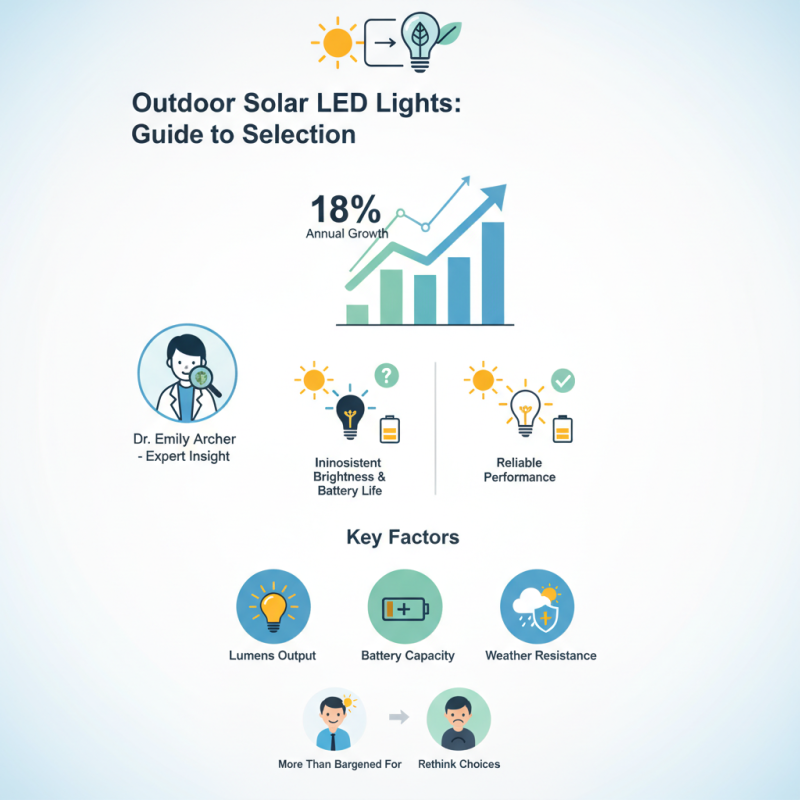
Outdoor solar LED lights have gained traction in recent years. It's important to understand what makes them effective and practical. According to the Solar Energy Industries Association, the solar lighting market is expected to grow by 18% annually. This trend underscores an increasing reliance on renewable energy solutions for outdoor lighting.
One expert in the field, Dr. Emily Archer, emphasizes, "Solar LED lights provide an efficient way to illuminate outdoor spaces while being environmentally friendly." Her insight reflects a growing awareness of sustainable practices among consumers. However, not all solar LED lights are created equal. Users often report inconsistent brightness and battery life issues.
This inconsistency necessitates careful consideration when selecting the best solar LED lights for your needs. Factors such as lumens output, battery capacity, and weather resistance play pivotal roles in performance. Some consumers find that they get more than they bargained for, while others have to rethink their choices after installation.
What to Consider When Choosing Solar LED Lights for Outdoor Use
When selecting solar LED lights for outdoor use, various factors must be considered. Efficiency is key. Solar panels typically convert around 15-20% of sunlight into energy. This can impact how long your lights stay illuminated each night. Limited sunlight in winter may result in dimmer lights.
Brightness is important too. Measured in lumens, brighter lights usually provide better illumination. For pathways, 100-200 lumens may suffice. However, for broader areas, look for options exceeding 500 lumens. The placement of your lights affects their performance. Positioning them in direct sunlight ensures maximum energy absorption.
Weather resistance is another crucial aspect. The IP rating, which ranges from 0 to 68, indicates how well a product withstands weather conditions. A rating of IP65 or higher is recommended for outdoor lights. Longevity also matters. Many solar lights have a lifespan of 3-5 years. This can result in additional maintenance and costs over time. Hence, frequent replacements can create a cycle of waste. Each consideration bears its weight while choosing solar LED lighting for outdoor needs.
Types of Solar LED Lights: A Comprehensive Overview
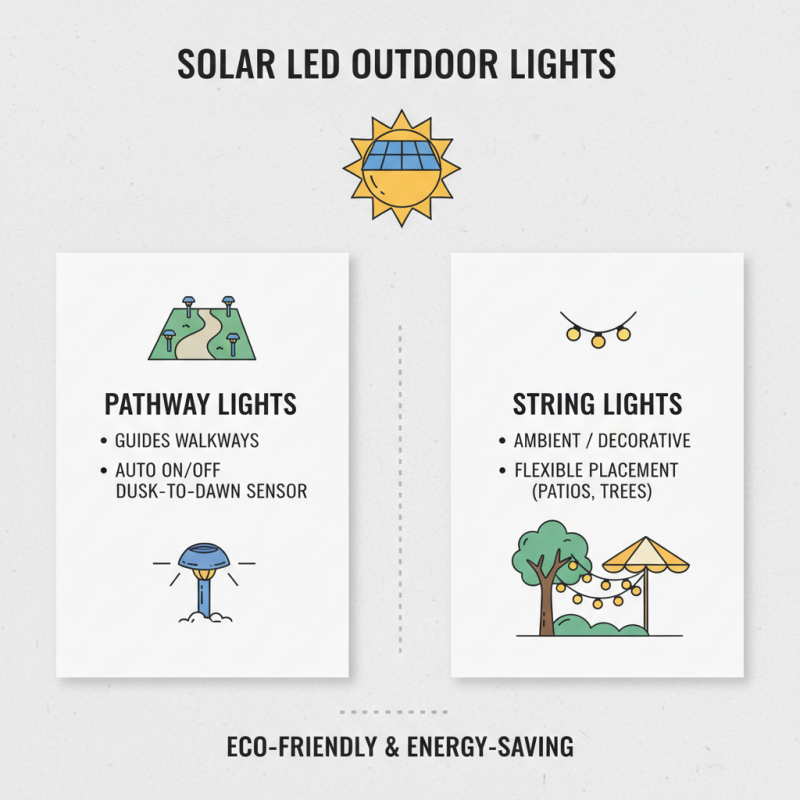
When considering outdoor spaces, solar LED lights come in various types. From pathway lights to string lights, each serves a unique purpose. Pathway lights illuminate walkways, ensuring safety and visibility. They typically feature sensors that activate at dusk, providing a gentle glow throughout the night.
String lights, on the other hand, create a cozy ambiance. Drape them over patios or wrap them around trees for a festive look. Their design can add charm to any outdoor gathering. While they are popular, their brightness might not be sufficient for all situations. Checking the lumens rating can help determine their effectiveness.
Finally, floodlights offer powerful illumination. They are ideal for larger areas like yards and driveways. However, placement is key; improper positioning can lead to glare or light pollution. It’s essential to experiment with angles to find the best setup. Evaluating each type based on your specific needs can lead to a more tailored outdoor experience.
Key Features of Top Solar LED Lights: Brightness and Lumens Explained
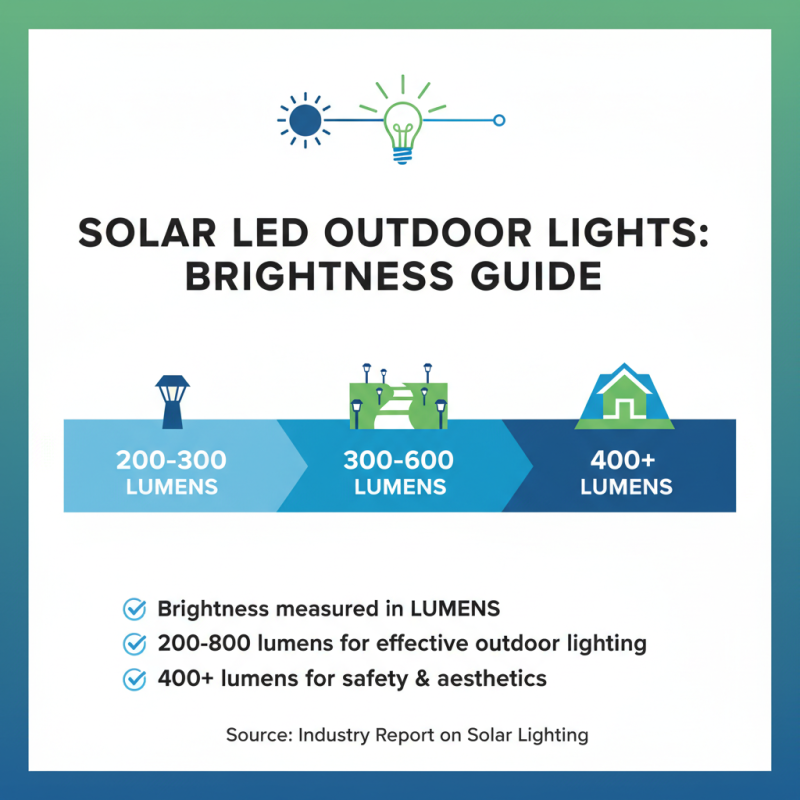
When selecting solar LED lights for outdoor use, brightness is a critical factor. Brightness is measured in lumens. For effective outdoor lighting, a range of 200 to 800 lumens is often recommended. A higher lumen count means more light, and many users prefer lights in the 300 to 600 lumen range for pathways and gardens. A recent industry report suggests that solar lights with at least 400 lumens can illuminate an area adequately for safety and aesthetic purposes.
In addition to brightness, the efficiency of solar panels plays a significant role. Most quality solar LED lights utilize monocrystalline panels, which convert up to 22% of sunlight into energy. This efficiency ensures that even on cloudy days, the lights can perform adequately. However, users should be aware that cheap models may have lower efficiency ratings, leading to reduced brightness at night. The design of the fixtures can also influence perceived brightness; reflective materials can enhance light distribution, while some designs may create uneven lighting patterns.
While it's easy to get caught up in high lumens and panel quality, user experiences reveal mixed results. Some lights may promise high lumens but fall short in actual usage due to battery limitations. It's essential to read user reviews and consider real-world performance over marketing claims. The choice of solar LED lights also often varies depending on specific needs, such as for decorative purposes, security, or functional lighting. Users should weigh their options carefully to find the right balance between brightness, efficiency, and overall satisfaction.
Battery Life and Solar Panel Efficiency: Industry Standards for Performance
When considering solar LED lights for outdoor use, battery life and solar panel efficiency are crucial. High-quality solar lights should have a battery that lasts long enough to meet your needs. Many users expect lights to shine brightly throughout the night. However, some products may only last a few hours. This can lead to frustration, especially on cloudy days when solar charging is limited.
Solar panel efficiency plays a key role in performance. A more efficient panel absorbs sunlight better and converts it into usable energy. Some panels are unable to capture enough sun during shorter winter days. Users often find that their lights perform poorly when needed the most. It's essential to look at the total energy output, not just the initial brightness. Many lights fade quickly due to inefficient solar panels and underwhelming battery capacity.
Consider where you'll place the lights. If they won't receive adequate sunshine, their performance will drop. Regular maintenance is also vital. Dust and debris on the panels can hinder their effectiveness. Balancing these factors can improve your outdoor lighting experience, ensuring that your chosen solar LED lights meet your expectations.
Installing and Maintaining Solar LED Lights for Optimal Outdoor Use
Installing solar LED lights for outdoor areas can greatly enhance safety and aesthetics. First, it's crucial to assess the space available for installation. A recent industry report highlights that properly placed lights can improve visibility by up to 60%. Choose locations where they can receive the most sunlight. Areas with direct sunlight maximize solar panel efficiency and light output.
Maintenance is equally important. Regular cleaning of the solar panels can increase their efficiency. Dust and debris can block sunlight, reducing energy absorption. According to another study, unmaintained solar lights can lose about 20% of their effectiveness within six months. It's also wise to inspect the batteries annually. Weak batteries will not hold a charge, leading to dim lights.
Sometimes, lights may not function due to unexpected issues like shadowing from nearby trees or buildings. It's vital to check the placement periodically and adjust if necessary. Finding the right model that fits your specific environment is a process. Not all solar LED lights are made equal, and testing different options may reveal surprising results.