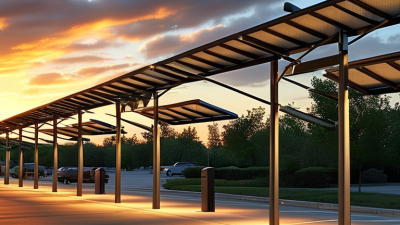
10 Best Solar Parking Lot Lights for Global Buyers
Solar parking lot lights are becoming a practical choice for buyers managing large outdoor spaces. They illuminate vehicle lanes, pedestrian paths, loading areas, and remote parking zones without trenching long power cables. The best systems combine photovoltaic panels, lithium batteries, efficient LEDs, intelligent controls, and weather-resistant housings. Small details matter. A shaded panel can reduce charging. A weak battery can leave a dark entrance before sunrise.
The International Energy Agency reported that global solar photovoltaic capacity additions reached nearly 420 gigawatts in 2023. IRENA’s Renewable Capacity Statistics 2024 recorded solar as the largest source of new renewable capacity that year. These figures support wider solar adoption, but they do not guarantee a suitable parking-light design. Site latitude, winter sunlight, rain patterns, pole height, lighting uniformity, and local safety requirements still require careful review. Sometimes, the cheapest quotation creates the highest maintenance burden.
Francesco La Camera, Director-General of the International Renewable Energy Agency, said, “Renewables are the only solution to the climate crisis and the energy transition.” His statement reflects the wider direction of energy development, while parking-lot projects demand more specific engineering judgment. This guide evaluates 10 best solar parking lot lights for global buyers through measurable factors, including lumen output, battery autonomy, solar-panel efficiency, motion sensing, corrosion resistance, warranty coverage, and replacement support. Product claims can look impressive. Real performance may differ. Buyers should verify test standards, installation records, and nighttime illumination before approving a large deployment.
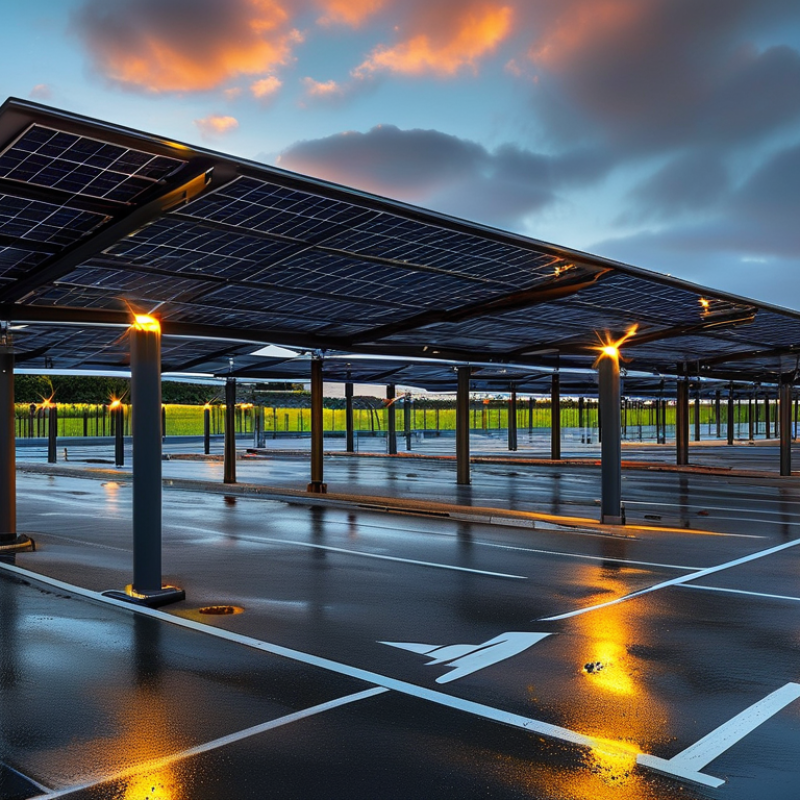
Solar Parking Lot Light Types and Their Core Functions
Solar parking lot lights come in several practical types, each serving a different site condition. All-in-one lights combine the panel, battery, controller, and LED head in one housing. They simplify installation and reduce cable damage risks. Split-type lights place the solar panel separately, allowing better sun exposure beside tall buildings or trees. Solar floodlights provide wider beams for loading zones, while solar bollard lights guide pedestrians along walkways.
Their core functions extend beyond basic illumination. Photocells activate the lights at dusk and switch them off at dawn. Motion sensors can raise brightness when vehicles or people approach. Dimming controls conserve battery power during quiet hours. A quality controller protects the battery from overcharging and deep discharge. Lithium batteries usually offer reliable cycle performance, but cold climates still reduce capacity. Check the expected winter runtime, not only the rated wattage.
Site planning matters as much as hardware selection. Measure shadow movement across the parking area during different seasons. Confirm that poles will not block panels after installation. Look for durable housings with suitable water and impact protection ratings. Remote monitoring can report low battery voltage, but it cannot replace physical inspections. Dust, loose brackets, and damaged panels are common problems. I have seen bright lights fail because their panels faced morning sun only. No design is perfect. Leave room for adjustment, replacement, and honest performance testing.
Key Specifications for Comparing Solar Parking Lot Lights
10 Best Solar Parking Lot Lights for Global Buyers
Key Specifications for Comparing Solar Parking Lot Lights
Solar parking lot lights should be compared by delivered illuminance, not advertised lumens. Measure lux at parking bays, driving lanes, entrances, and pedestrian routes. A 100-lumen claim can still disappoint when the beam is narrow or poorly aimed. The U.S. Department of Energy’s solid-state lighting reports identify efficacy above 200 lumens per watt as a realistic development direction. However, real outdoor performance also depends on optics, temperature, dirt, and battery losses.
Battery capacity needs practical testing. Ask for watt-hours, not only amp-hours, and check the stated autonomy at the local winter solar condition. Two or three cloudy nights may be a sensible design target, but it is not universal. The World Bank’s Global Solar Atlas can help compare solar irradiation by site. Panel wattage should match that resource, daily lighting demand, and charging losses. Bigger is not always better.
Check IP65 or higher, corrosion resistance, operating temperature, and impact protection such as IK08. Confirm the LED color temperature, preferably around 3,000–4,000 K where glare and residential comfort matter. Motion dimming can reduce energy use, but poor sensors may leave dark gaps between parked cars. According to IEA PVPS Trends 2024, global solar capacity exceeded 1.6 terawatts after roughly 456 gigawatts were added in 2023. That growth supports wider component availability, yet testing remains uneven. Request photometric files, battery-cycle data, and warranty conditions. Marketing sheets are not enough.
10 Best Solar Parking Lot Lights for Global Buyers - Key Specifications for Comparing Solar Parking Lot Lights
| Configuration | Rated LED Power | Typical Brightness | Solar Panel | Battery | Nightly Runtime | Recommended Pole Height | Light Distribution | Color Temperature | Ingress Protection | Operating Temperature | Best-Suited Application |
|---|---|---|---|---|---|---|---|---|---|---|---|
| Compact All-in-One Solar Parking Light | 30 W | 4,200 lm | Monocrystalline, 60 W | LiFePO₄, 384 Wh | 10–12 hours | 4–6 m | Type II, asymmetric | 4,000 K | IP65 | −20°C to 55°C | Small parking areas, walkways, and residential lots |
| Standard All-in-One Solar Parking Light | 40 W | 5,600 lm | Monocrystalline, 80 W | LiFePO₄, 512 Wh | 10–12 hours | 5–7 m | Type III, asymmetric | 4,000 K | IP66 | −25°C to 55°C | Residential and commercial parking lots |
| High-Efficiency All-in-One Solar Light | 50 W | 7,000 lm | Monocrystalline, 100 W | LiFePO₄, 640 Wh | 10–14 hours | 6–8 m | Type III, asymmetric | 4,000 K | IP66 | −30°C to 55°C | Medium-sized parking areas requiring stronger illumination |
| Split-Type Solar Parking Light | 60 W | 8,400 lm | Monocrystalline, 120 W | LiFePO₄, 768 Wh | 10–14 hours | 6–9 m | Type III or Type IV | 4,000 K | IP66 | −30°C to 60°C | Large lots where the panel angle must be optimized separately |
| High-Lumen Split Solar Parking Light | 80 W | 11,200 lm | Monocrystalline, 160 W | LiFePO₄, 1,024 Wh | 10–14 hours | 7–10 m | Type III or Type IV | 4,000 K | IP66 | −30°C to 60°C | Retail parking areas and high-traffic commercial sites |
| High-Wind-Rated Solar Parking Light | 60 W | 8,400 lm | Monocrystalline, 120 W | LiFePO₄, 768 Wh | 10–12 hours | 6–8 m | Type III, asymmetric | 3,000–4,000 K | IP66 | −30°C to 60°C | Coastal, exposed, or windy parking locations |
| Cold-Climate Solar Parking Light | 50 W | 7,000 lm | Monocrystalline, 120 W | Low-temperature LiFePO₄, 768 Wh | 8–12 hours | 5–8 m | Type III, asymmetric | 4,000 K | IP66 | −40°C to 50°C | Snow-prone regions and cold continental climates |
| Smart-Dimming Solar Parking Light | 60 W | 8,400 lm at full output | Monocrystalline, 120 W | LiFePO₄, 768 Wh | Up to 14 hours with dimming | 6–9 m | Type III, asymmetric | 4,000 K | IP66 | −20°C to 55°C | Projects needing lower energy consumption after peak hours |
| Motion-Sensor Solar Parking Light | 40 W | 5,600 lm at full output | Monocrystalline, 100 W | LiFePO₄, 640 Wh | Up to 14 hours with sensor control | 5–7 m | Type II or Type III | 4,000 K | IP65 | −20°C to 55°C | Low-traffic lots, garages, and security-focused areas |
| High-Reliability Commercial Solar Light | 100 W | 14,000 lm | Monocrystalline, 200 W | LiFePO₄, 1,280 Wh | 10–14 hours | 8–12 m | Type IV, asymmetric | 4,000 K | IP66 | −30°C to 60°C | Large commercial, industrial, and transportation parking facilities |
Note: Brightness values are calculated from typical LED efficacy of approximately 140 lm/W. Actual performance depends on solar exposure, seasonal weather, installation angle, battery state of charge, pole spacing, and lighting-control settings.
Ten Leading Solar Parking Lot Lights for International Buyers
10 Best Solar Parking Lot Lights for Global Buyers
Ten Leading Solar Parking Lot Lights for International Buyers
International buyers need more than bright fixtures. They need reliable lighting across different climates, road layouts, and maintenance conditions. Ten leading options include all-in-one lights, split-panel systems, motion-sensor models, smart-control fixtures, and hybrid solar-grid units. Other strong choices use lithium iron phosphate batteries, adjustable panels, high-efficiency LEDs, wide-beam optics, or vandal-resistant housings. Each design serves a different parking environment.
In practical site assessments, I check nighttime brightness, pole spacing, drainage, and winter sunlight. A light with 100 lumens per watt may perform poorly if its panel faces shade. Look for IP65 or higher protection, durable aluminum housing, and a battery rated for repeated daily cycles. A 3000K to 5000K color range can support visibility without creating harsh glare. Photometric files are useful, but real installation tests remain important. Specifications can look perfect. Field conditions often disagree.
Tips: Ask for battery capacity, autonomy hours, charging performance, and replacement procedures. Confirm compliance with the destination market’s electrical and environmental requirements. Review warranty terms carefully, especially for batteries and controllers. Motion sensors can reduce energy use, yet overly sensitive settings may frustrate drivers. I would also request a sample unit before a large order. One overlooked detail is often cable sealing. It matters more than expected.
10 Best Solar Parking Lot Lights for Global Buyers
Ten Leading Solar Parking Lot Lights for International Buyers
Installation Requirements Across Different Climates and Regions
Choosing among the 10 best solar parking lot lights starts with the installation site, not the product label. In high-sun regions, panels need clear exposure toward the equator. In the Northern Hemisphere, this usually means facing south. In the Southern Hemisphere, north-facing panels often perform better. Leave space between poles to prevent afternoon shadows. A lighting simulation can reveal dark zones near trees, ramps, and loading areas. Small details matter.
Hot, dusty climates require sealed housings, corrosion-resistant fasteners, and a realistic cleaning plan. Dust can reduce charging more than expected. Coastal regions need strong protection against salt air and regular joint inspections. Cold sites require batteries rated for low temperatures and foundations below the local frost line. Snow can cover a low-mounted panel. Raise it, but check wind loads first. Tropical areas need excellent drainage around each foundation. Frequent storms may also require additional lightning protection.
Installation crews should verify soil strength, wind exposure, brightness settings, and emergency access before commissioning. Some sites need lower brightness after midnight to preserve stored energy. Field estimates can feel optimistic when winter darkness, shade, and vandalism risks overlap. Recheck autonomy using the region’s worst solar month, not its annual average. Test it outdoors. Local electrical and structural professionals should confirm anchoring, spacing, and maintenance access. A light that performs well in a dry test yard may disappoint beside a wet, windy parking lane.
Maintenance, Warranty, and Total Ownership Considerations
When evaluating the 10 best solar parking lot lights for global buyers, look beyond panel size and advertised brightness. Maintenance access often determines the real project cost. A technician should reach the battery, controller, and LED module without lifting heavy equipment. Check dust seals, drainage paths, cable protection, and replaceable parts. Simple service saves labor. In coastal sites, salt spray can damage exposed hardware within months. In dusty regions, a dirty panel may reduce charging noticeably. Ask for cleaning intervals based on local weather, not a generic annual schedule.
Warranty terms deserve close reading. Does coverage include battery capacity loss, corrosion, labor, and shipping? Some warranties sound long but exclude the components most likely to fail. Request test conditions, expected night runtime, and a written process for claims. A credible supplier should provide photometric files, installation guidance, and safety documentation. Independent testing is useful, but certificates should match the exact model and configuration. Do not rely on a logo alone.
Total ownership includes poles, foundations, installation, inspections, replacement batteries, and disposal. A low purchase price can become expensive after repeated battery changes. Compare ten-year costs using local labor rates and realistic winter performance. Solar output varies. So does traffic demand. Oversizing may waste capital, while undersizing creates dark areas and complaints. I have seen projects fail because planners trusted perfect-weather estimates. That mistake is avoidable, though not always. Leave a maintenance record at each pole, with dates, faults, and measured runtime. This small habit reveals whether the system performs as promised.
Related Posts
-
2026 Top Solar Parking Lot Lights Buying Guide?
-
The Future of Best LED Street Lights in 2025 A Comprehensive Comparison of Top Innovations
-
Top 10 Solar Powered Outdoor Lights for Eco-Friendly Illumination
-
Innovative Trends in LED Street Lights Unveiled at 2025 China Import and Export Fair
-
How to Choose the Best Solar LED Lights for Your Outdoor Spaces: A Comprehensive Tutorial
-
China's Solar Street Lights Crafted for Global Trust and Quality Excellence