
What Types of Outdoor Wall Lights Are Best?

Outdoor Wall Lights do more than brighten a doorway. They shape the first impression of a home, reveal steps and paths, and add useful light after sunset. The best type depends on the wall, the task, and the mood you want. A compact downlight can define an entry without spilling light into a neighbor’s window. A lantern-style sconce adds character beside a timber door. For a long, dim passage, evenly spaced fixtures often work better than one powerful lamp.

Residential-lighting educator Randall Whitehead is known for promoting layered lighting. A practical paraphrase of that approach is: “Combine useful light with controlled glare.” This is not a verbatim quotation. It offers a sound starting point for choosing outdoor fixtures. Consider shielded sconces where people approach a door, and broader wall washers where textured brick deserves attention. Small details matter. A warm beam across rough stone feels different from a bare, cool bulb aimed at eye level.

This guide will compare common Outdoor Wall Lights, including lanterns, downlights, up-and-down sconces, and motion-sensor models. It will explain where each type works best, what light spread to consider, and how weather exposure affects fixture selection. Check the product’s outdoor rating and follow its installation instructions. A beautiful fitting still needs the right location. The right choice should make the entry safer, comfortable to use, and visually balanced—not simply brighter.
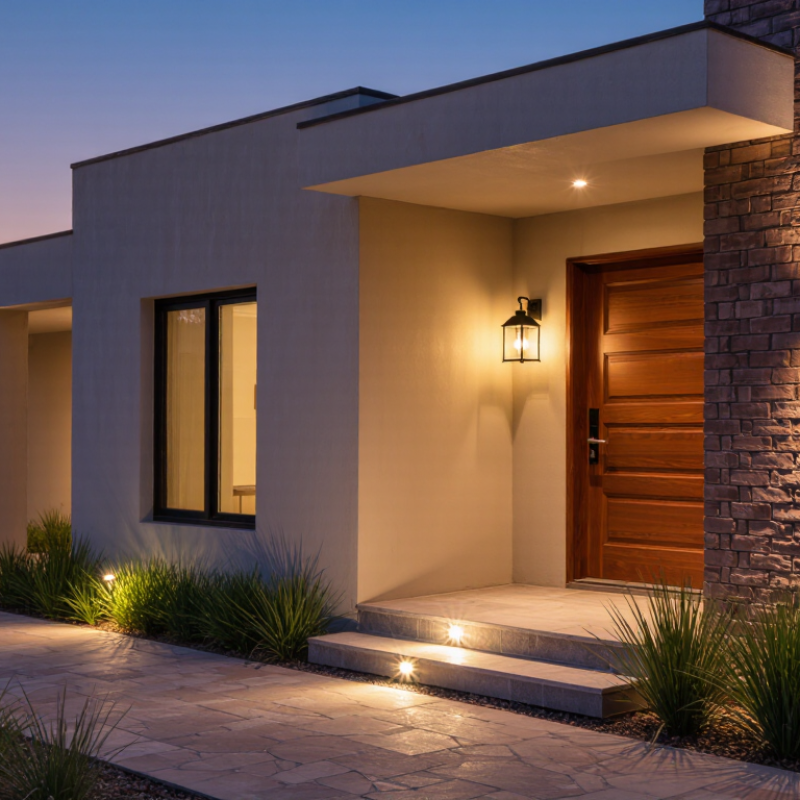
What Types of Outdoor Wall Lights Are Best?

Criteria for Choosing Outdoor Wall Lights

Choosing outdoor wall lights starts with the site, not the fixture’s appearance. Check whether the wall is exposed to rain, sprinklers, or coastal air, then select a fixture rated for that exposure. A wet-location rating matters on uncovered walls. So does durable, corrosion-resistant construction. At the front door, a shielded light aimed down can illuminate the lock and steps while reducing glare through nearby windows. Choose a warm color temperature for a welcoming entry, and test the beam at night; a bright spot can still leave the path dark.

Match light output to the task. A porch needs comfortable facial visibility, while a side entrance may need broader coverage. Motion sensors can reduce unnecessary operating time, but adjust their range to avoid triggering on passing traffic. Efficiency is another practical criterion: the U.S. Department of Energy’s LED Lighting guidance reports that LEDs use at least 75% less energy and last up to 25 times longer than incandescent bulbs. Those figures are useful benchmarks, though actual savings depend on use and installation. One detail is easy to overlook: neighboring walls can reflect light into bedrooms. Check the result from inside, too.

Common Types of Outdoor Wall Light Fixtures

Common Types of Outdoor Wall Light Fixtures include flush mounts, lanterns, up-and-down sconces, gooseneck lights, and motion-sensing fixtures. Flush mounts sit close to the wall, making them practical beside narrow doors or covered entries. Lanterns cast a familiar, broad glow, while up-and-down sconces create neat vertical beams on plain exterior walls. Gooseneck fixtures suit porches and garage doors, but their projecting arms need enough clearance. Motion-sensing lights can help illuminate a path only when someone approaches. Good placement matters. A fixture’s beam can spill into a neighbor’s window if its angle is poorly chosen.

Tips: Check the fixture’s weather rating and use bulbs approved for enclosed housings when needed. Compare lumens, not just watts, and aim light toward steps, locks, and address numbers. The U.S. Department of Energy’s Energy Saver guidance says LEDs use at least 75% less energy and last up to 25 times longer than incandescent lighting. That can make LED versions of these fixtures a practical choice, though savings depend on use and installation.

There is no single best type for every wall. A lantern may look welcoming at a front door, yet feel too decorative beside a plain side entrance. Consider mounting height, nearby windows, and the surface material before choosing. Warm, controlled light often feels comfortable outdoors; very bright fixtures can create harsh glare on pale siding. A small sample or temporary placement check can reveal problems before installation.

How Each Fixture Type Performs Outdoors

Wall lanterns spread light across entryways and patios, making them useful near doors and seating areas. Their open sides can create warm, decorative patterns, but clear glass may reveal dust and insects. Choose a sealed fixture rated for its exposure, especially on a wall facing wind-driven rain. Check the gasket and finish, too. Small details matter.

Cylinder sconces often direct light up, down, or both ways. Downward beams can brighten steps and reduce glare toward neighbors, while upward light highlights brick or siding. On pale walls, the effect is crisp; on dark surfaces, it may appear faint. I have found that beam angles can look different once installed, so test placement before drilling if possible. A mock-up is worth the trouble.

Bulkhead lights are practical in exposed or frequently used areas. Their sturdy covers help protect the lamp, and their broad output suits garages, side doors, and utility paths. Motion-sensing models can save energy, though passing branches or pets may trigger them. Sensors also behave unevenly in cold weather. Not perfect.

For any fixture, match its weather rating to the site, aim light onto walking surfaces, and avoid excessive brightness. A covered porch needs less protection than a wall exposed to driving rain, and the right choice depends on both conditions and desired light.

Matching Wall Lights to Different Exterior Areas

A front entry needs clear faces and a visible keyhole, not a harsh beam. Place a shielded wall light near the door, with its height chosen to avoid glare when visitors approach. For a long porch, two modest fixtures usually spread light more evenly than one bright lamp. Warm-white light often feels welcoming against brick or painted siding.

Along steps and narrow side passages, choose compact fixtures that cast light downward and across the walking surface. Check the shadows at night: a bright patch can still leave the next step hard to see. A garage wall may need broader, brighter coverage, especially near a side door or work area. Aim the light away from neighboring windows and drivers’ eyes. Small detail, big difference.

Patios call for softer, layered lighting. Wall fixtures near seating can define the space, while lower brightness keeps faces comfortable and lets the garden remain visible. Match the fixture’s weather rating to its exposure; a sheltered porch and a wall facing driving rain are not the same setting. It is easy to over-light an exterior. I’d rather see a dimmer, well-aimed fixture than a powerful lamp that washes out the whole wall. For hardwired installations, use a qualified electrician.

Weather Resistance, Installation, and Maintenance

What Types of Outdoor Wall Lights Are Best? Weather Resistance, Installation, and Maintenance

Outdoor wall lights face rain, wind, dust, and sharp temperature changes, so their weather rating matters as much as their style. Choose a fixture rated for its actual location, especially near the coast or an uncovered entry. Sealed joints and corrosion-resistant materials help, but no fixture is maintenance-free. Water can still collect where the wall or mounting plate is uneven.

Installation affects performance. Mount the light on a stable, level surface, and use a properly sealed box and suitable outdoor-rated connections. Keep the fixture clear of gutters and sprinklers when possible. For wiring, hire a qualified electrician if you are unsure; a rushed installation can leave moisture paths that are hard to spot. I’ve found that the small details matter. They are easy to overlook.

Tips: Check seals and fasteners twice a year, and look for cracked lenses, rust, or flickering. Switch off power before cleaning, then use a soft cloth and mild soap. Avoid abrasive cleaners, which can damage coatings. If water keeps appearing inside the fixture, do not just wipe it away; inspect the seal and installation. Some problems may take a season to show.

(08) 7200 3909