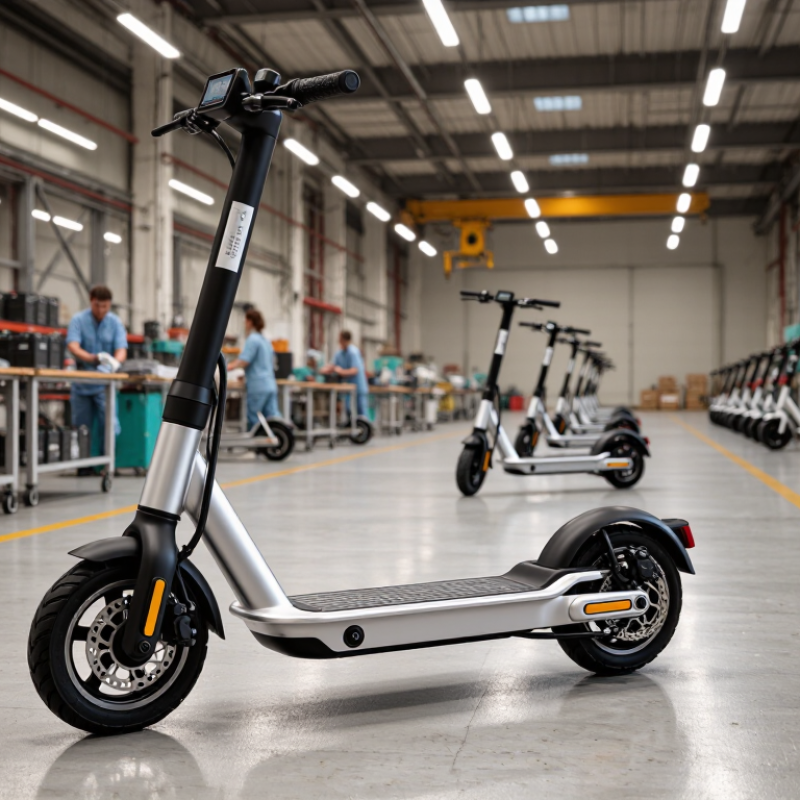
How to Find a Top Electric Scooter Manufacturer in China
Finding a reliable Electric Scooter Manufacturer in China requires more than comparing prices on a supplier platform. A serious search begins with product requirements, target markets, and realistic delivery expectations. Define the scooter’s motor power, battery range, frame material, braking system, and intended rider before contacting factories. Clear specifications reduce misunderstandings and expose suppliers that rely on vague promises.
Factory verification matters. Request business credentials, production photographs, quality-control procedures, and recent product samples. If possible, arrange a video inspection or an independent factory audit. Watch how workers handle wiring, battery installation, welding, and final testing. Small details often reveal larger risks. Ask whether the manufacturer performs water-resistance checks, brake tests, battery protection checks, and road simulations. Certifications should match the destination market, not simply appear in a sales presentation. Documentation must be current and traceable.
Communication is another practical test. A dependable supplier answers technical questions directly and explains limitations without hiding behind marketing language. Discuss minimum order quantities, spare parts, packaging, warranty handling, lead times, and payment milestones in writing. Samples should be tested under realistic conditions, including slopes, repeated braking, and several charging cycles. One successful sample proves very little. No supplier is perfect. Even an experienced buyer can overlook unclear battery terms or weak after-sales support. That is why staged orders and third-party inspections remain sensible safeguards. The strongest partnership combines engineering capability, transparent communication, stable production, and evidence that the factory can support scooters after delivery. Price matters, but reliability usually costs less than repeated failures.
Define Your Electric Scooter Product and Sourcing Requirements
A reliable sourcing project starts with a precise product brief, not a factory shortlist. Describe the rider, terrain, climate, speed target, payload, folding method, and daily distance.
The IEA’s Global EV Outlook 2024 reports that electric two- and three-wheeler sales exceeded 10 million units in 2023. This signals strong demand, but it does not define your customer. A commuter carrying a laptop needs different deck space and suspension from a rental operator.
Specify measurable requirements. State the target range under a defined rider weight, temperature, and road condition. Select battery chemistry, charging time, motor output, tyre type, water-resistance level, and brake configuration. Request test data, not only catalog claims.
Include applicable market requirements for battery transport, electrical safety, labeling, and documentation. Ask for cell traceability, firmware control, spare-part availability, and a clear warranty process. Small details become expensive after production starts.
Tips:
Build a one-page specification sheet with pass-or-fail criteria. Test at least two samples on slopes, wet pavement, rough surfaces, and repeated braking. Compare actual range with the supplier’s laboratory figure; the difference may be uncomfortable. Define acceptable weight and noise limits before negotiating price. A low unit cost can hide weak connectors, slow parts supply, or costly tooling. Review the brief after testing. Some assumptions will be wrong. That is normal, but ignoring them is not.
Research China’s Electric Scooter Manufacturing Regions and Supplier Types
How to Find a Top Electric Scooter Manufacturer in China
China’s electric scooter industry is concentrated in several practical manufacturing regions. Guangdong, especially Shenzhen and Dongguan, is known for electronics, controllers, displays, and battery integration. Zhejiang, including Yongkang and Ningbo, has strong metalworking, frame production, and vehicle assembly capabilities. Jiangsu also offers established machining and electrical supply chains. Regional strength matters. A factory near its main component suppliers may reduce delays and improve communication.
Supplier types vary widely. An OEM manufacturer builds products from your specifications, while an ODM supplier offers existing designs for modification. A contract assembler may handle production but outsource batteries, motors, or controllers. Trading companies can simplify sourcing, yet they may provide less visibility into factory processes. Ask who owns the production equipment. Request a facility address, quality-control workflow, sample records, and recent production photos. Do not rely on polished brochures alone.
Small details reveal capability. Check weld consistency on the frame, cable protection near folding joints, tire alignment, charger labeling, and battery test documentation. Ask whether the supplier performs incoming inspection, process checks, and final testing. Independent product testing can add confidence. So can a small pilot order.
Do not rush this decision. A low quotation may hide weaker materials or unstable subcontracting. I have found supplier comparisons useful, but they are never perfect. Factory audits can miss seasonal staffing changes and communication gaps. Keep written specifications, approval samples, and inspection criteria. Expect some revision.
Evaluate Manufacturer Qualifications, Factory Capacity, and Product Quality
How to Find a Top Electric Scooter Manufacturer in China
A reliable search starts with qualifications, not attractive product photos. Verify the company license, factory address, export history, and engineering team. Request recent third-party test reports for batteries, chargers, brakes, and lighting. The International Energy Agency’s Global EV Outlook 2024 reports that electric two- and three-wheelers exceeded half of global sales in 2023. Demand is strong. So is supplier competition.
Factory capacity needs physical verification. Ask to see welding stations, battery assembly areas, aging-test rooms, and finished-goods storage. Compare claimed output with production records, worker numbers, and shipment data. A factory claiming 20,000 scooters monthly should show enough charging racks and inspection stations. Capacity is not only machine count. It includes quality control during peak season. I would not trust a polished showroom alone.
Product quality appears in repeated details. Inspect frame welds, cable routing, tire alignment, folding joints, and waterproof seals. Request sample testing after vibration, braking, charging, and repeated folding cycles. The Global Market Report on Electric Scooters by Grand View Research identifies battery performance, safety, and durability as major purchasing factors. Ask how failures are recorded and corrected. One overlooked weakness can become a costly recall. My own judgment would remain cautious when a supplier provides perfect samples but avoids factory-floor access. A transparent manufacturer should accept independent inspections and explain test limits clearly.
Compare Samples, Certifications, Pricing, and Production Terms
Selecting a Chinese electric scooter manufacturer requires more than a polished catalogue. Request two production samples with identical specifications. Check weld consistency, brake response, battery enclosure fit, charger temperature, and waterproofing after repeated use. One attractive sample proves very little. In practice, small details often expose process weaknesses.
Certification documents must match the exact model, battery, charger, and factory address. Verify test numbers with the issuing laboratory, rather than trusting scanned certificates. The IEA’s Global EV Outlook 2024 reports that electric two- and three-wheelers remain a major part of global electric mobility, with China leading this segment. That scale supports strong manufacturing expertise, but it can also hide uneven quality between suppliers. Ask for recent audit records, quality-control procedures, and traceability data. The ISO Survey 2023 also shows the continuing global importance of ISO 9001 quality systems, although certification alone does not guarantee reliable scooters.
Tip: Compare total landed cost, not unit price. Include tooling, packaging, spare parts, inspection, freight, warranty reserves, and payment terms. Request pricing at several quantities. A low quotation may exclude essential components. It happens.
Production terms deserve equal attention. Confirm minimum order quantity, lead time, monthly capacity, sample approval rules, and remedies for delayed delivery. Ask whether the supplier accepts staged inspections before shipment. The World Bank’s Logistics Performance Index 2023 highlights how logistics reliability affects international trade, so delivery promises should be supported by documented shipping experience. My own assessment would remain cautious: forecasts change, factories get busy, and written terms protect both sides better than friendly assurances.
| Anonymous Supplier Profile | Typical Product Configuration | Sample Cost and Lead Time | Sample Evaluation Points | Available Compliance Documents | Battery and Shipping Documents | Indicative EXW Price per Unit | Minimum Order Quantity | Mass-Production Lead Time | Payment Terms | Warranty and After-Sales Terms | Risk Assessment |
|---|---|---|---|---|---|---|---|---|---|---|---|
| Supplier Profile A High-volume factory | 350 W rated motor 36 V, 10 Ah lithium-ion battery 8.5-inch pneumatic tires Mechanical front brake and electronic rear brake Foldable commuter frame | USD 80–150 per sample 7–12 calendar days Sample fee usually refundable after an agreed order quantity | Check controller response, folding mechanism, brake distance, battery range, charger temperature, and water-resistance design. | CE technical file: available on request RoHS test report: available ISO 9001 quality system: reported Verify certificate scope and validity before ordering | UN 38.3 test summary: available MSDS/SDS: available Battery packing instructions: available Confirm whether documents match the final battery model | USD 220–285 Pricing normally depends on battery capacity, display, tires, packaging, and order volume | 100–300 units | 25–35 calendar days after deposit and artwork approval | Common structure: 30% deposit and 70% before shipment Letter of credit may be negotiable for larger orders | 12-month limited warranty for major electrical components Spare-parts ratio and labor responsibilities should be written into the contract | Lower production risk Suitable for repeat orders, but audit production capacity and final inspection controls. |
| Supplier Profile B Customization-focused factory | 500 W rated motor 48 V, 15 Ah lithium-ion battery 10-inch tubeless tires Dual disc brakes Rear suspension and color customization | USD 120–220 per sample 15–25 calendar days Custom tooling or printed parts may require additional charges | Compare hill-climbing performance, suspension noise, frame weld quality, paint consistency, app or display functions, and maximum load rating. | CE documentation: generally available RoHS documentation: generally available EMC and LVD test reports: request by model ISO 9001 status: verify current certificate | UN 38.3: request the complete test summary MSDS/SDS: normally available IEC 62133-related battery evidence: confirm applicability Check dangerous-goods shipping support | USD 365–495 Custom colors, firmware, packaging, and tooling can increase unit cost | 200–500 units | 35–50 calendar days after design approval and deposit | Common structure: 30% deposit and 70% before shipment Tooling is often paid separately and may not be refundable | 12-month warranty for the scooter body and electrical system Battery warranty may be limited by cycle count or capacity retention | Moderate production risk Strong for product differentiation; control engineering changes and tooling ownership. |
| Supplier Profile C Small-batch export supplier | 250 W rated motor 36 V, 7.5 Ah lithium-ion battery 8-inch solid tires Rear drum brake and electronic braking Lightweight entry-level frame | USD 65–120 per sample 5–10 calendar days from stock Sample specifications may differ from later production batches | Inspect battery authenticity, motor power labeling, charger plug type, folding latch strength, tire wear, and carton protection. | CE declaration: may be available RoHS evidence: request model-specific report EMC/LVD reports: confirm before purchase ISO 9001: not assumed without verification | UN 38.3: request before shipment MSDS/SDS: may require updating Confirm battery supplier, cell type, and transport classification | USD 165–225 Lower pricing may reflect basic components, limited customization, or smaller purchasing volume | 50–100 units | 20–30 calendar days for standard configurations | Common structure: 30% deposit and 70% before shipment Use payment protection or staged inspection for first orders | 6–12-month limited warranty Confirm replacement-part availability and response time in writing | Higher verification requirement Attractive for testing demand, but conduct a factory audit and pre-shipment inspection. |
| Supplier Profile D Premium performance factory | 800 W peak motor rating 48 V, 20 Ah lithium-ion battery 10-inch pneumatic or self-sealing tires Front and rear disc brakes Hydraulic or dual suspension system | USD 180–320 per sample 20–30 calendar days Performance testing and firmware configuration may extend the schedule | Test thermal management, continuous-load performance, braking under payload, waterproof connectors, suspension durability, and battery range at realistic speeds. | CE technical documentation: available for designated models RoHS reports: available EMC and LVD evidence: model-specific ISO 9001 or equivalent quality controls: verify through audit | UN 38.3 test summary: expected for export battery packs MSDS/SDS: available Sea and air freight battery requirements: confirm with freight forwarder Verify charger and battery conformity as separate items | USD 620–890 Price is influenced by motor controller, suspension, battery cells, display, and braking components | 100–300 units | 45–60 calendar days after final specification approval | Common structure: 30% deposit and 70% before shipment Larger orders may use milestone payments tied to inspection approval | 12–18-month limited warranty Request a documented process for battery, controller, and display replacement | Good technical capability Higher purchase price; confirm local-market speed, lighting, and safety requirements. |
| Supplier Profile E OEM/ODM project supplier | 350–600 W rated motor options 36 V or 48 V battery platforms 8.5-inch or 10-inch tires Custom dashboard, firmware, packaging, and accessories Multiple frame and battery configurations | USD 100–250 per sample 20–40 calendar days Engineering samples may be followed by a separate production validation sample | Verify bill of materials, software version, logo placement, packaging dimensions, accessory compatibility, and consistency between approved and production samples. | CE, RoHS, EMC, and LVD documents may be prepared by model Request test reports rather than only declarations Confirm the legal manufacturer shown on all documents | UN 38.3 and MSDS/SDS should correspond to the final battery pack Request battery specification sheet and charger report Confirm export carton markings and dangerous-goods handling process | USD 285–560 Development fees, molds, software work, and packaging design may be quoted separately | 300–1,000 units, depending on customization level | 40–70 calendar days after tooling, artwork, and pre-production approval | Common structure: 30% deposit, balance against inspection or before shipment Tooling, engineering, and certification fees require separate agreement | 12-month limited warranty Define software support, replacement-part stock, defect rate, and corrective-action deadlines | Project-management dependent Suitable for private-label programs; use signed specifications and formal change-control procedures. |
| Supplier Profile F Cost-optimized volume supplier | 350 W rated motor 36 V, 10–12.5 Ah lithium-ion battery 8.5-inch honeycomb tires Basic LED display Standard aluminum-alloy commuter frame | USD 70–140 per sample 7–15 calendar days Stock samples may be available for faster evaluation | Check actual battery capacity, charger certification, frame alignment, welding, brake adjustment, water ingress protection, and carton drop resistance. | CE and RoHS documents: request by exact model EMC/LVD reports: verify test-lab details Quality-system certification: confirm current validity | UN 38.3: required for applicable lithium batteries MSDS/SDS: request before booking transport Confirm that battery markings match shipping documents | USD 195–260 Lowest quotations should be checked for battery capacity, cell grade, controller specification, and packaging inclusions | 300–1,000 units | 30–45 calendar days after deposit and production confirmation | Common structure: 30% deposit and 70% before shipment Avoid full prepayment before sample and document approval | 6–12-month limited warranty Agree on defect thresholds, spare-parts pricing, and claim-handling procedures | Cost-sensitive risk May suit price-led markets; apply stricter inspection to confirm component consistency. |

Note: Prices, lead times, minimum order quantities, and document availability are indicative China-market benchmarks for electric scooters and must be confirmed through a written quotation, model-specific certificates, sample approval, factory audit, and pre-shipment inspection. EXW means Ex Works and excludes freight, insurance, duties, taxes, and destination charges.
Verify Contracts, Quality Control, Shipping, and After-Sales Support
China is a major production base for electric scooters. The IEA’s Global EV Outlook 2024 identifies electric two- and three-wheelers as the most electrified road-transport segment, with China leading deployment. That scale can hide uneven factory discipline. Ask for a contract covering specifications, battery capacity, charger type, firmware, packaging, delivery dates, and warranty remedies. Use a signed golden sample as the acceptance reference. Avoid vague terms such as “premium quality.”
Quality control should be measurable. Require traceable cell records, battery management system test results, and UN 38.3 documentation. Use pre-shipment inspection with agreed AQL levels, brake tests, charging checks, water-resistance checks, and carton-drop tests. A factory video is not evidence. The World Bank’s 2023 Logistics Performance Index gives China a score of 3.7 out of 5, yet a national score cannot validate one supplier’s packing or export team. That distinction matters.
Set shipping responsibilities through clear Incoterms, cargo insurance, pallet dimensions, and damage-report procedures. Request loading photos, container seals, serial-number lists, and tracking details before departure. After-sales terms should define response times, spare-parts availability, diagnostic support, and warranty claim evidence. A practical target might be a reply within 24 hours and replacement parts dispatched within seven days. Fast promises fail. Review the supplier’s actual records, not only its sales presentation. One uncomfortable lesson remains: even a strong factory can perform poorly when instructions are incomplete.