
7 Intelligent Pole Buying Tips for Global Buyers

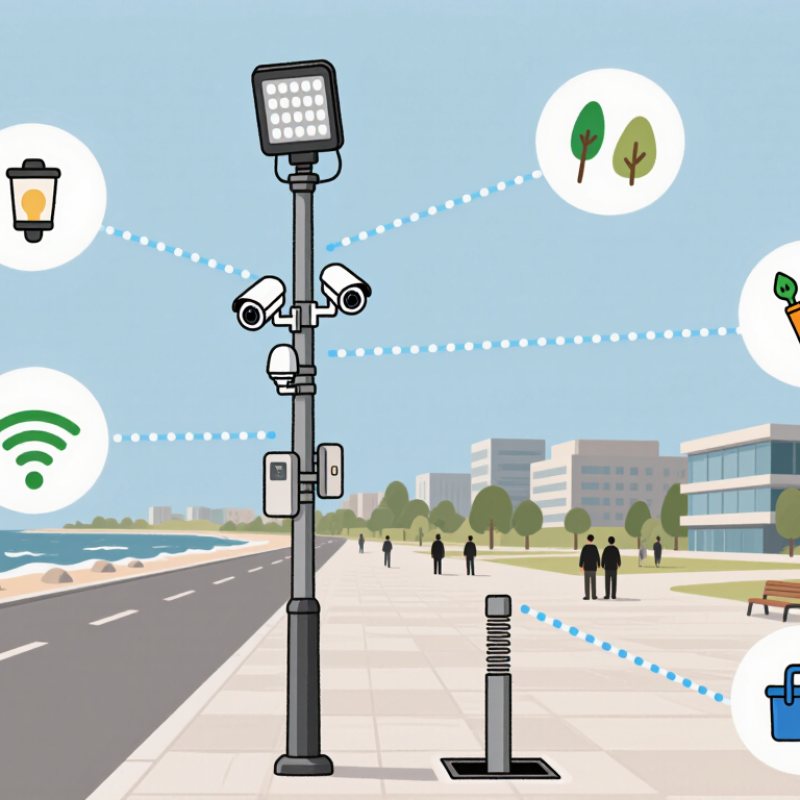
An Intelligent Pole can bring lighting, cameras, sensors, connectivity, and public-service equipment together on one street fixture. For global buyers, that promise is only useful when the system fits the site. A coastal road needs corrosion-resistant finishes. A busy plaza may need discreet equipment and reliable network coverage. The pole should solve real needs, not simply collect features.

Urban-design expert Jan Gehl wrote, “First we shape the cities—and then they shape us.” His observation offers a useful lens for evaluating connected street infrastructure. Buyers should ask how a pole affects daily life, maintenance work, and the surrounding streetscape. They should also check whether its modules can be upgraded without replacing the entire structure. Small details matter.

This guide presents seven practical buying considerations, from defining project requirements to reviewing materials, integration, installation, and after-sales support. Request clear drawings, component specifications, test documentation, and realistic delivery schedules. Compare total ownership costs, not just the initial quotation. Confirm who handles software updates and replacement parts. Ask for references from installations with similar weather, traffic, and operating conditions. A polished presentation is not proof of long-term performance. No checklist is perfect; project conditions vary, and buyers may discover gaps late. That is a reason to ask harder questions early. A well-chosen Intelligent Pole should be dependable, maintainable, and suited to the people who use the space.
7 Intelligent Pole Buying Tips for Global Buyers

Define Project Requirements and Intelligent Pole Functions

Before selecting an intelligent pole, define what the project must achieve. Record road width, pole spacing, mounting height, local weather exposure, and available power. A site walk can reveal details drawings miss, such as tree cover or a narrow maintenance access lane.

Start with the actual need. A pedestrian route may require even lighting and emergency communication, while a transport corridor may need traffic sensors and public information displays. Avoid specifying every available function by default. Extra equipment adds cost, power demand, and maintenance work.

Next, match each function to a measurable requirement. State the lighting level or coverage area, sensor purpose, data connection method, and expected operating hours. Check whether cameras, environmental sensors, Wi-Fi, or charging points are genuinely useful at that location. They are not automatically useful.

Confirm load capacity, cable routes, backup power needs, and access for repairs before finalizing the pole design. Ask suppliers for test reports, installation drawings, and clear limits for each module. These documents make comparisons more reliable.

In practice, teams sometimes overlook who will maintain the equipment after installation. That gap deserves a hard look. A pole that supports many functions but cannot be serviced easily may underperform, even when its specifications appear impressive.

Check Smart Features, System Compatibility, and Local Standards

A smart pole is only useful when its features solve a real site problem. Check whether lighting controls, cameras, environmental sensors, or Wi-Fi access points are genuinely needed. Each device adds power demand, data traffic, maintenance, and possible points of failure. Ask for the pole’s operating range, communications protocol, and power requirements in writing. Then compare them with the equipment already used by your city or project team. A connector that looks compatible may still require a gateway or software change. Small detail, big cost.

Local standards need equal attention. Confirm electrical grounding, wind-load ratings, corrosion protection, and wireless requirements with qualified local professionals before ordering. Coastal sites may need stronger corrosion resistance, while exposed roads can demand higher wind-load capacity. Check pole height, foundation drawings, cable access, and inspection requirements against local specifications. Keep test reports and installation documents with the project records. A polished feature sheet is not proof of compliance. One weak point in many plans is assuming that a supplier’s standard configuration suits every location; it often does not. Recheck the details after the site survey, even if it delays the purchase by a few days.

How to use this chart: Each bar counts actionable checks in this buyer checklist; the figures are checklist counts, not market-survey data. Confirm smart features, interface compatibility, and applicable local standards before purchasing.

Evaluate Pole Materials, Durability, and Environmental Suitability

Pole material selection should start with the site, not the catalogue. Coastal air carries chlorides that can attack exposed steel, especially around cut edges, fasteners, and the pole base. Hot-dip galvanizing or a compatible coating system can reduce corrosion risk, but damaged surfaces still need inspection. Salt is relentless. The NACE IMPACT study estimated global corrosion costs at US$2.5 trillion, or 3.4% of global GDP, in 2013. This figure covers many industries, not poles alone, but it shows why lifecycle protection matters. For concrete poles, check moisture exposure, freeze-thaw conditions, and transport weight. For composite poles, confirm UV resistance and local repair options.

Ask suppliers for coating thickness, test methods, and documented performance in environments comparable to the installation site. A small coastal town and a dry inland highway do not need identical specifications. The International Aluminium Institute reports that recycling aluminium uses about 95% less energy than producing primary aluminium. That advantage matters only when collection and recycling are practical locally. Look closely at the whole assembly, too: dissimilar metals, trapped water, and poor drainage can shorten service life. A useful check is to inspect the pole’s ground-line detail, where water and soil meet. Specifications can look complete on paper and still miss that detail.

Compare Supplier Credentials, Certifications, and Total Cost

7 Intelligent Pole Buying Tips for Global Buyers

Compare Supplier Credentials, Certifications, and Total Cost

A polished certificate is a starting point, not proof that a pole will perform well. The ISO Survey 2022 recorded 1,265,216 valid ISO 9001 certificates across 189 countries. That scale makes scope checks essential: confirm the certificate covers the supplier’s actual manufacturing site and relevant processes. Ask for traceable material records, inspection plans, test results, and the applicable design standard. Check who issued the certificate and whether its accreditation can be verified. Details matter.

Compare total cost, not just the unit price. Include packaging, freight, import charges, foundations, installation, coatings, inspections, and expected maintenance. Request the assumptions behind the quoted service life; soil conditions, wind exposure, and corrosion protection can change costs substantially. NIST Handbook 135-2022 provides a life-cycle cost framework for comparing initial and future costs over an evaluation period. Use the same period and discount-rate assumptions for every bid. One point is easy to miss: a low-cost pole can require expensive access equipment or earlier replacement. I still find supplier estimates too optimistic when maintenance is treated as “minimal” without a schedule. Ask for the schedule, and price its tasks.

Plan International Shipping, Installation, and Ongoing Support

Treat international shipping as part of the pole specification, not an afterthought. UNCTAD’s Review of Maritime Transport 2024 reported that seaborne trade grew 2.4% in 2023 and highlighted risks from disrupted routes. Allow time for delays. Before dispatch, confirm each pole’s packed length, gross weight, lifting points, and protection against moisture and abrasion. Long sections may need special handling, while small crates of anchor bolts or access panels can be overlooked. Small parts matter. Check the packing list against the installation drawings before the shipment leaves.

Plan installation before approving production drawings. Share site wind conditions, foundation details, cable entry positions, and access requirements with the supplier and a qualified local engineer. Confirm who provides lifting equipment, wiring, commissioning, and replacement parts; vague responsibilities become expensive on site. The World Bank’s 2023 Logistics Performance Index assessed 139 economies across areas including customs, infrastructure, and shipment timeliness. Use destination-country logistics conditions to set realistic delivery and clearance buffers. Then agree on support in writing: response times, spare-part availability, warranty coverage, and remote troubleshooting steps. A spreadsheet will not catch every site surprise. It still happens. Keep a few critical spares nearby, and record pole serial numbers and installation dates for future service.

(08) 7200 3909