
What Is a Mining Truck and How Does It Work?

A Mining Truck is a heavy-duty vehicle designed to move blasted rock, ore, and waste across large mine sites. Unlike highway trucks, it works on steep haul roads, loose ground, and changing weather. Its enormous tires can stand taller than a person. The rigid frame carries a strong dump body, while diesel-electric or mechanical systems deliver power to the wheels. Some models transport hundreds of tonnes in one cycle.

How does it work? An operator loads the body with an excavator or wheel loader. The truck then follows a planned route to a crusher, stockpile, or waste area. Braking systems control its speed downhill, where heat and weight create serious demands. At the destination, hydraulic cylinders raise the body and release the material. Cameras, sensors, radios, and dispatch software help operators maintain safe distances and efficient cycles.

Mining engineers consider payload, road grade, tire pressure, fuel use, and maintenance records before selecting a truck. Experienced operators also watch for blind corners, dust clouds, soft shoulders, and changing ground conditions. Small problems matter. A damaged tire or delayed inspection can affect an entire production shift. Real sites are messier than diagrams. This explanation may simplify some systems, because truck designs vary by manufacturer and mine. Still, understanding the basic cycle makes the machine easier to evaluate. It also shows why safe operation depends on trained people, reliable procedures, and constant equipment checks.
What Is a Mining Truck and How Does It Work?

What Is a Mining Truck?

A mining truck is a heavy-duty vehicle designed to move rock, ore, and overburden across mine sites. It operates on private haul roads, not ordinary highways. Its large body carries substantial loads, while reinforced frames withstand vibration, dust, and uneven ground.

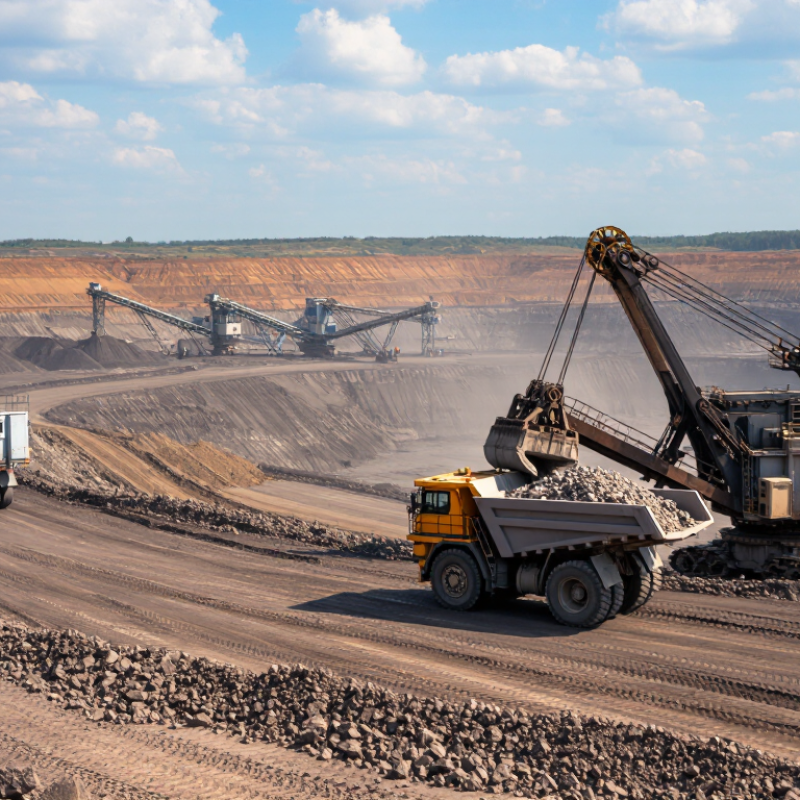
The truck works through a simple cycle. A loading machine fills its open bed at an excavation area. The driver then follows a planned route to a crusher, stockpile, or dumping zone. Powerful engines, transmission systems, hydraulic brakes, and steering controls support this movement. Some models use diesel-electric systems, which convert engine power into electrical drive power. Large tires provide traction, but they still need regular pressure checks.

From field experience, performance depends on more than engine size. Road grade, weather, load distribution, and operator judgment affect every trip. A wet ramp can increase stopping distance. An overloaded bed can strain suspension parts. Mining trucks are impressive, but they are not flawless. Sensors may warn of hazards, yet workers must still verify conditions around the vehicle. Maintenance teams inspect brakes, tires, hydraulics, and structural joints before failures become expensive or dangerous. Even careful planning can miss changing ground conditions. That weakness deserves constant review.

How Mining Trucks Are Designed for Heavy-Duty Work

What Is a Mining Truck and How Does It Work?

How Mining Trucks Are Designed for Heavy-Duty Work

A mining truck moves blasted rock, ore, and waste across demanding haul roads. Its design begins with a reinforced frame that carries extreme loads without unnecessary flexing. Large wheels spread ground pressure across uneven surfaces. Deep-tread tires also improve traction on loose gravel, although they wear quickly in sharp rock.

Power comes from a high-output engine and, in some designs, an electric drive system. The drivetrain must produce strong torque at low speeds. This helps the truck climb steep ramps while carrying many tonnes. Powerful cooling systems protect the engine, brakes, and electrical parts in hot, dusty pits. The challenge is constant. More cooling capacity adds weight and consumes space.

Suspension components absorb impacts from potholes and broken road edges. Hydraulic braking systems provide controlled stopping during long descents. Retarders can reduce brake heat, but they cannot replace careful speed management. The operator’s cab uses reinforced windows, filtered air, and clear visibility around the loading area. Cameras and sensors may support awareness, yet technology can fail or become dirty. Human judgment still matters.

A typical haul cycle includes loading, traveling, dumping, and returning. Each stage affects fuel use, tire life, and production time. Maintenance teams inspect joints, hoses, tires, and brake temperatures because small defects can become serious failures. No mining truck is perfectly efficient. A stronger component may increase durability but reduce payload. That trade-off deserves regular review.

What Main Systems Power and Control a Mining Truck?

A mining truck is a mobile production system, not simply a large vehicle. Its powertrain usually combines a high-output diesel engine, generator, traction motors, and final drives. The engine turns fuel energy into electricity, while traction motors deliver torque to the wheels. Mechanical-drive trucks use a transmission instead. The choice depends on haul distance, gradient, payload, and maintenance access. The International Energy Agency reported that heavy industry and mining-related operations remain significant energy users, making power efficiency a practical concern rather than a design preference.

Control begins with the operator’s commands, but several systems share responsibility. Electronic control units regulate engine speed, braking, wheel slip, and retarding temperature. Hydraulic circuits steer the truck, raise the dump body, and apply service brakes. Sensors monitor oil pressure, axle temperature, payload, tire condition, and vehicle position. The Global Mining Guidelines Group identifies perception, positioning, communications, and machine control as separate layers for automated mining equipment. That separation matters when dust blocks cameras or radio signals weaken.

A loaded truck may climb a ramp while carrying hundreds of tonnes, so heat management becomes decisive. Retarders convert downhill motion into heat, and cooling systems must remove it continuously. The Mine Safety and Health Administration emphasizes inspection and functional testing for mobile equipment safety. Still, a sensor reading is not a perfect truth. Mud, vibration, and calibration drift can mislead the control system. Engineers must compare digital warnings with physical evidence, including tire marks, brake temperature, and unusual vibration. That judgment is easy to underestimate.

How a Mining Truck Operates on a Mining Site

A mining truck is a heavy haul vehicle designed to move blasted rock, ore, or overburden across a mining site. Its work begins before loading. The operator completes a walk-around inspection, checking tires, lights, brakes, steering, fluid leaks, and warning systems. The truck then follows a controlled route to the loading area. A hydraulic excavator or shovel fills the body in measured passes. Even loading matters. Uneven material can affect stability and tire wear.

After loading, the truck travels along graded haul roads to a crusher, stockpile, or waste dump. The operator controls speed according to road conditions, slope, visibility, and payload. Retarders and service brakes help manage downhill movement. At the destination, the truck positions on stable ground and raises its body through hydraulic cylinders. Material slides out, then the empty truck returns for another cycle. Site controllers may track location, fuel use, payload, and idle time. The system appears efficient, but small delays can disturb the entire fleet.

Tips: Keep payloads within the approved limit. Inspect haul roads after rain or heavy traffic. Use radio communication at intersections and dumping areas. Watch blind zones carefully. A clean windshield helps. Operators should report unusual vibration, brake response, or tire damage immediately. One overlooked warning can become expensive. Conditions also change quickly, so a route judged safe in the morning may need a slower approach later. Safety procedures should be reviewed regularly, not treated as fixed paperwork.

What Types of Mining Trucks Are Used?

In surface mines, rigid-frame haul trucks move blasted rock from loading areas to crushers or waste dumps. Their large bodies handle heavy loads across steep, uneven roads. Powerful diesel-electric systems deliver high torque at low speeds. These trucks need wide haul roads and regular brake inspections.

Articulated dump trucks serve smaller pits, soft ground, and narrow routes. A hinged frame helps each truck follow sharp bends without losing stability. That flexibility matters.

Underground mining trucks are shorter and lower, allowing them to pass through confined tunnels. Their reinforced bodies carry ore from the working face to underground crushers or transfer points. Some use battery-electric power, which can reduce heat and exhaust in enclosed areas, although charging systems require careful planning.

Mining sites also depend on specialized support trucks. Water trucks spray dusty roads, improving visibility and reducing airborne particles. Fuel and service trucks carry tools, lubricants, and replacement parts to remote work zones.

Trolley-assist trucks receive electrical power through overhead lines on selected uphill routes. This can lower fuel use, but it limits route flexibility.

The categories are not perfectly clean. An articulated truck may haul ore, while a rigid truck may carry waste. Actual selection depends on payload, road design, ground conditions, ventilation, and maintenance capacity. Production figures alone mislead. A truck that looks efficient may lose time waiting for loaders, repairs, or safe access.

(08) 7200 3909