
What Are the Top China 3D Printing Manufacturers?

China has become a major force in 3d Printing, serving industries from automotive engineering to medical equipment. Its manufacturers offer diverse technologies, including FDM, SLA, SLS, metal laser sintering, and large-format construction systems. However, a long supplier list does not automatically indicate dependable quality.

This guide examines leading China 3D printing manufacturers through practical business criteria. These include machine accuracy, material compatibility, production capacity, software stability, after-sales support, certifications, and documented customer experience. A factory visit can reveal details that brochures hide, such as dust control, calibration routines, and spare-parts storage. Small details matter.

Reliable evaluation also requires comparing application results, not only purchase prices. A low-cost printer may appear attractive, yet unstable temperature control can increase rejected parts and maintenance expenses. Some manufacturers demonstrate impressive prototypes but provide limited technical support after delivery. That weakness deserves attention. We will consider both established companies and specialized suppliers, while separating verified information from promotional claims.

The discussion will also recognize an uncomfortable point: “top” depends on the buyer’s needs. A manufacturer suited to dental models may not support aerospace-grade metal production. Public rankings can be useful, but they rarely replace independent testing, reference checks, and careful contract review. Readers should therefore treat this overview as a structured starting point, rather than a final purchasing decision. Evidence remains essential.
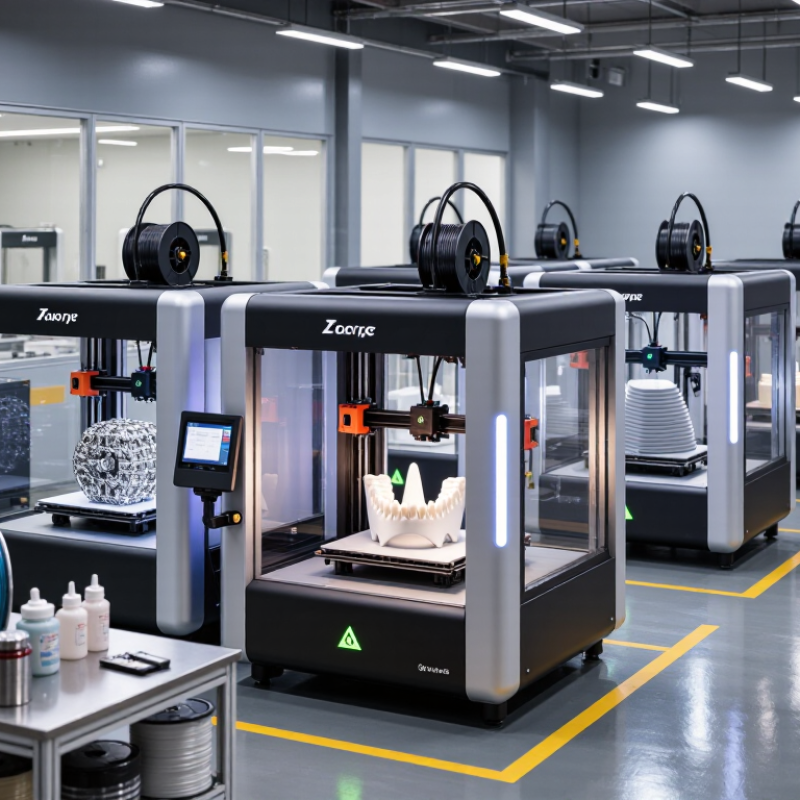
What Are the Top China 3D Printing Manufacturers?

How China’s 3D Printing Manufacturing Sector Is Defined

How China’s 3D Printing Manufacturing Sector Is Defined

China’s 3D printing sector is broader than printer production. It includes materials, software, design services, contract manufacturing, testing, and equipment maintenance. ISO/ASTM 52900 defines additive manufacturing as producing objects layer by layer from digital model data. This definition helps separate true 3D printing from conventional machining or injection molding.

The sector is also measured by application. Aerospace, medical devices, automotive tooling, dental production, and industrial components form its core demand. The Wohlers Report 2024 valued the global additive manufacturing industry at US$20.035 billion in 2023, with 13.5% annual growth. However, China-specific figures often differ. Reports may count hardware only, or include materials and printing services. That inconsistency needs attention. A supplier’s real position should be judged by production capacity, process stability, material traceability, and certification records, not factory size alone.

Tips: Check the complete production chain. Ask about powder or resin inspection, machine calibration, dimensional testing, and batch records. Review samples with thin walls, internal channels, and rough surfaces. Practical testing reveals more than a polished catalog. Experience also shows that fast delivery can hide weak quality controls. I would compare at least three suppliers and request recent inspection documents before making a decision. Some conclusions remain uncertain when market data uses different definitions.

What Criteria Identify a Leading Chinese 3D Printing Manufacturer

What Are the Top China 3D Printing Manufacturers?

A leading Chinese 3D printing manufacturer proves its ability through repeatable results, not impressive photographs. Buyers should inspect production floors, calibration records, and sample parts from recent orders. A reliable supplier can explain its layer settings, material storage, and inspection process clearly. Details matter. Ask for dimensional reports, surface-finish measurements, and documented testing methods. These records show whether quality depends on skilled individuals or a stable system.

Engineering capability is another important measure. Strong manufacturers support design reviews, prototype adjustments, and production planning. Their teams understand tolerances, warping, support structures, and post-processing limits. They should also recommend suitable materials for heat, pressure, or repeated use. A useful trial order can reveal more than a sales presentation. Compare printed parts against approved drawings under consistent lighting and measurement tools.

Communication and traceability also identify a serious partner. Each order should have a clear material batch, machine record, inspection result, and delivery schedule. Transparent suppliers explain delays instead of hiding them. No factory performs perfectly every time. Even experienced teams may miss a small defect or underestimate finishing time. The difference appears in their response. Do they investigate the cause, correct the process, and share evidence? Certification can support trust, but it cannot replace site audits, technical conversations, and independent sample checks. Cost still matters, yet the cheapest quote may conceal unstable tolerances, weak support, or expensive rework.

Which Companies Lead China’s Industrial 3D Printing Market

China’s industrial 3D printing market is led by manufacturers with strong engineering depth, not simply large production volumes. The most competitive companies develop metal, polymer, and ceramic systems for demanding factory environments. They support aerospace parts, medical components, automotive tooling, and energy equipment. Their machines often combine precise motion control, monitored temperature, and automated powder handling.

Leading manufacturers also build complete production ecosystems. They provide software, material testing, process validation, and local maintenance teams. In practice, this support can matter as much as printer speed. A factory manager may value a technician arriving within one day more than a slightly larger build chamber. Reliable training is another important measure. Operators need clear procedures for calibration, cleaning, and quality inspection.

Performance still varies between suppliers. Some systems produce excellent prototypes but struggle during continuous production. Others offer attractive prices but provide limited data tracking or application support. This difference is easy to miss during a showroom demonstration. Buyers should examine printed samples, machine uptime, spare-part access, and certification records. They should also ask for production references from similar industries.

The strongest companies are improving closed-loop monitoring and factory integration. They are connecting printers with design platforms, robotic handling, and digital quality records. This trend may reduce manual errors, although implementation remains uneven. China’s market is advancing quickly, but leadership is not permanent. Manufacturers must keep proving repeatability on the factory floor. That is where claims become measurable.

China Industrial 3D Printing Market: Reported Industry Output

China’s industrial additive manufacturing sector has expanded steadily as demand has grown across aerospace, automotive, medical, tooling, and advanced manufacturing. The figures below are rounded public industry estimates and represent the overall ecosystem rather than the revenue of any individual company.

Unit: RMB billion. Scope includes industrial equipment, materials, software, applications, and related services. Values are approximate market-wide estimates compiled from publicly reported Chinese industry data.

How Chinese Manufacturers Compare Across Technologies and Industries

China’s leading 3D printing manufacturers compete differently across technologies and industries. Wohlers Report 2024 valued the global additive manufacturing market at $20.035 billion in 2023. Chinese suppliers benefit from strong production capacity and competitive equipment pricing.

Fused filament fabrication remains common for education, prototypes, fixtures, and small production runs. It offers simple maintenance and affordable materials. Stereolithography provides smoother surfaces for dental models, casting patterns, and visual prototypes. Selective laser sintering suits functional polymer parts, especially in automotive interiors and customized industrial housings. Fit matters.

Metal powder bed fusion demands stricter control. Aerospace and medical users examine powder quality, oxygen levels, laser calibration, and batch traceability. Manufacturers serving these sectors increasingly provide process records and validation support. The ISO/ASTM 52900 standards help buyers compare technical language, although certification alone does not guarantee reliable parts.

Industry reports from the International Data Corporation and Wohlers Associates show continuing demand for localized production, tooling, and customized medical applications. Binder jetting may reduce production time for larger batches, but shrinkage control remains a practical concern. This is where comparisons become less tidy. A low machine price can hide expensive post-processing, software limitations, or slow technical support. Buyers should test identical geometries, materials, and tolerances before selecting a supplier. A factory producing excellent prototypes may still struggle with repeatable metal components. My assessment would remain cautious without reviewing sample parts, inspection data, and long-term service records.

What Buyers Should Evaluate Before Choosing a Chinese 3D Printing Supplier

What Are the Top China 3D Printing Manufacturers?

What Buyers Should Evaluate Before Choosing a Chinese 3D Printing Supplier

China has a broad 3D printing supply base, but production scale alone proves little. The Wohlers Report 2024 valued the global additive manufacturing industry at $20.035 billion in 2023, with 13.5% annual growth. Buyers should examine whether a supplier’s equipment, materials, and inspection process can support repeatable production, not just attractive prototypes.

Ask for machine model details, layer-resolution data, material certificates, and recent process records. A reliable factory should explain its calibration schedule and show how it controls warping, porosity, and dimensional variation. Request a small paid sample. Measure wall thickness, surface roughness, and critical tolerances independently. The sample may look excellent.

That is not enough.

For regulated or safety-sensitive applications, review quality procedures against ISO 9001 and relevant ISO/ASTM 52900 terminology. Check whether testing follows documented methods, including tensile strength, density, and fatigue performance where applicable. The 2023 ISO/ASTM additive manufacturing standards catalogue includes terminology and process guidance, but certification does not guarantee every batch will perform identically. Inspect batch traceability, nonconformance handling, and corrective-action records. Delivery capacity also matters: compare stated monthly output with actual machine utilization, staffing, and lead-time history. A lower quote can hide weaker inspection, unstable materials, or costly post-processing. Ask direct questions, record the answers, and verify them against production evidence.

(08) 7200 3909