
Why Choose P65 Gobo Light for Professional Lighting?

Professional lighting is becoming more demanding. Venues now expect vivid imagery, reliable operation, and lower energy use from every fixture. The International Energy Agency reports that lighting represents about 15% of global electricity consumption. Its analysis also identifies LEDs as a major efficiency opportunity. These figures explain why modern designers increasingly evaluate optical performance alongside power consumption. A P65 Gobo Light can support that shift when its LED engine, lens system, and housing match the project’s actual requirements.

In practical use, this fixture can project logos, textures, or architectural patterns onto a wall, stage floor, or outdoor façade. Sharp edges matter. So does consistent color across several units. If the product includes IP65 protection, it is designed for dust-tight performance and resistance to water jets, according to IEC 60529 classifications. That protection can reduce interruptions during outdoor events, although it does not make careless installation acceptable. Weather exposure, cable connections, and drainage still require professional planning.

The U.S. Department of Energy states that LED products can use at least 75% less energy and last up to 25 times longer than incandescent lighting. That advantage may lower maintenance pressure in demanding venues. However, performance claims deserve inspection. Beam angle, gobo size, cooling design, color rendering, and dimming behavior vary between manufacturers. No fixture is perfect. A P65 Gobo Light may be an excellent choice, but only after photometric tests, environmental checks, and a clear comparison with the venue’s creative brief. Reports provide direction; hands-on testing provides confidence.
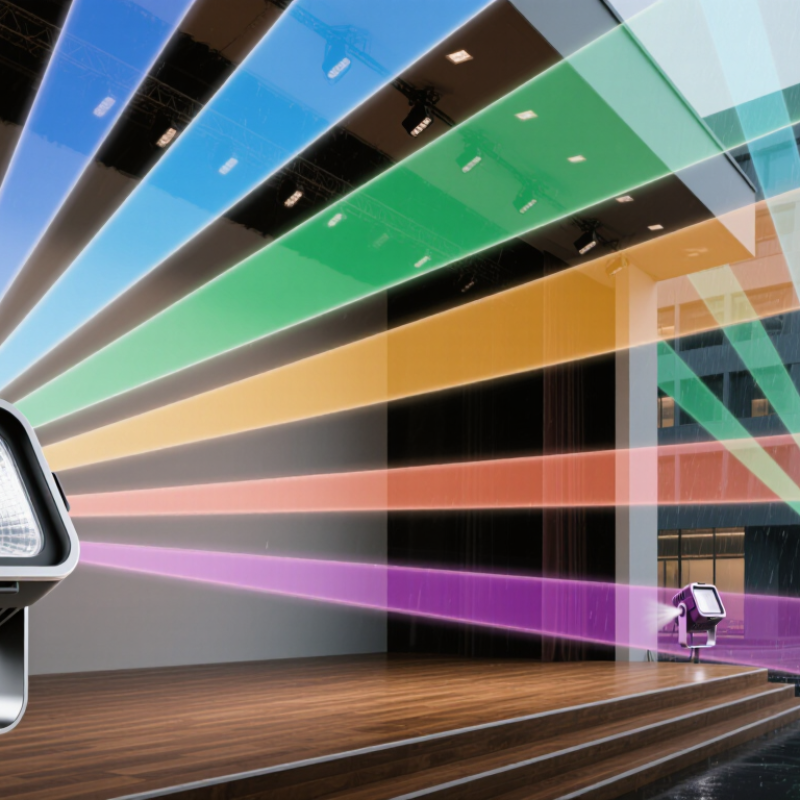
Why Choose P65 Gobo Light for Professional Lighting?

What Is a P65 Gobo Light?

A P65 gobo light is usually an outdoor gobo projector with an IP65 enclosure rating. However, “P65” is not a complete international protection code. IEC 60529 uses IP65: the first digit means dust-tight protection, while the second allows water jets from limited directions. It is not rated for immersion. Always check the certification label and test report.

In practical use, the fixture projects a metal or glass gobo through a focused LED beam. It can place a crisp logo, pattern, or architectural texture on a wall, stage, pathway, or event entrance. A sealed housing helps protect the optical engine from dust and rain. Still, the cable gland and connector matter. I have seen outdoor units fail because the connection stayed exposed, not because the lamp was poorly sealed.

Energy performance also supports professional deployment. The U.S. Department of Energy reports that LED products can use at least 75% less energy and last up to 25 times longer than incandescent lighting. That advantage matters when a venue runs several projectors for long hours. Yet brightness alone is not enough. Beam angle, gobo size, color temperature, cooling design, and focus distance shape the final image. A 2023 industry lighting report from Grand View Research identifies growing demand for LED systems in commercial and architectural applications, but market forecasts can vary between researchers. Treat them as planning references, not guarantees.

How P65 Gobo Lights Work in Professional Setups

Why Choose P65 Gobo Light for Professional Lighting?

How P65 Gobo Lights Work in Professional Setups

P65 gobo lights work by sending a controlled beam through a metal or glass pattern. The pattern blocks selected areas of light. A lens then projects the remaining image onto a surface. In professional setups, technicians adjust focus, beam angle, and shutter position carefully. This creates crisp logos, textures, window effects, or architectural shapes. The fixture may sit on a truss, floor stand, or lighting position. Placement matters more than many beginners expect.

A typical setup begins with the projected distance and surface texture. For example, a wall eight meters away may need sharper focus and tighter framing. Technicians often connect the light to a control console for dimming, color changes, and timed cues. They also check heat, cable routing, and ventilation before the show starts. If outdoor use is required, the fixture should have a suitable weather-resistance rating. Never assume protection from appearance alone.

Small adjustments make a visible difference. A slightly rotated gobo can change the entire mood. My early setups sometimes looked sharp in the center but soft around the edges. That problem taught me to test focus from the audience viewpoint. Brightness is not everything. Excessive output can wash out the pattern, while weak output loses detail. P65 gobo lights are useful when precision, repeatability, and controlled visual texture matter in demanding professional environments.

Why Choose P65 Gobo Light for Professional Lighting? - How P65 Gobo Lights Work in Professional Setups

Performance Dimension Typical P65 Gobo Light Data How It Works in a Professional Setup Professional Benefit
Light Source High-power white LED, commonly around 60–70 W The LED produces a concentrated beam that passes through the optical and gobo assembly. Lower power consumption and longer operating life than many traditional halogen fixtures.
Projection Method Metal or glass gobo placed in the optical path The gobo blocks selected areas of light, allowing the lens to project a pattern, logo, texture, or shape. Creates repeatable visual effects without using large scenic backdrops or printed materials.
Beam Angle Typically fixed or manually adjustable, approximately 15°–30° The beam angle determines the projected image size at a given throw distance. Supports both focused accent projection and wider coverage when the fixture is positioned appropriately.
Color Temperature Commonly around 5,600–6,500 K for daylight-style output The fixture produces a cool white beam that can be combined with color filters or other luminaires. Useful for crisp architectural projection, daylight-balanced video environments, and event decor.
Color Rendering Many professional LED fixtures provide CRI 80 or higher CRI describes how naturally colors appear when illuminated by the fixture compared with a reference light source. Helps maintain more believable colors on scenery, surfaces, products, and people.
Pattern Interchangeability Compatible gobo sizes depend on the optical housing; common ranges include approximately 25–30 mm Operators can replace the gobo to change the projected image without replacing the complete fixture. Reduces setup cost and allows one light to support multiple productions.
Focus and Image Control Manual focus adjustment; some configurations include framing or zoom control The lens is adjusted until the gobo edges appear sharp on the target surface. Improves image clarity and helps fit projection precisely within walls, stages, floors, or set pieces.
Dimming Typically 0–100% electronic LED dimming Output intensity is reduced electronically to balance the gobo image with ambient and key lighting. Provides better exposure control and smoother transitions during live productions.
Control Options Local controls and, where supported, DMX512 control DMX allows intensity and other available parameters to be programmed from a lighting console. Fits into theater, studio, exhibition, worship, and event-control workflows.
Cooling System Passive cooling or fan-assisted cooling, depending on the fixture design Heat is removed from the LED and housing to maintain stable output during extended operation. Supports consistent performance; fan noise should be considered in quiet recording environments.
Mounting and Positioning Commonly installed on a lighting stand, ceiling mount, track, or truss system The fixture is aimed at a projection surface and aligned with the required throw distance. Enables controlled placement of patterns while keeping floor space clear.
Typical Applications Stage texture, architectural accents, retail displays, exhibitions, weddings, and studio sets A gobo light projects controlled imagery onto selected surfaces rather than broadly illuminating an entire area. Adds depth, branding space, atmosphere, and visual separation with relatively compact equipment.
Key Selection Check Verify actual lumen output, gobo size, beam angle, noise level, control protocol, and electrical rating before purchase Specifications vary between P65-style fixtures and should be matched to the venue, projection distance, and surface reflectivity. Prevents soft images, insufficient brightness, compatibility problems, and unwanted noise in professional productions.

Note: The figures above are typical professional-use ranges for P65-style LED gobo fixtures. Always confirm the technical datasheet for the specific unit and installation requirements.

Key Features That Support Reliable Lighting Performance

Why Choose P65 Gobo Light for Professional Lighting?

Reliable lighting begins with stable output, not impressive specifications alone. A P65 gobo light should deliver sharp projection, consistent brightness, and controlled beam shaping during long events. The U.S. Department of Energy reports that LED lighting can use at least 75% less energy than incandescent lighting. Lower power demand also reduces heat inside the fixture.

Thermal control matters. Excessive heat can shift color, soften image edges, and shorten component life. A durable housing, efficient heat sink, and protected optical chamber support steadier performance. If the fixture claims IP65 protection, installers should verify the test documentation. The label alone proves little. Weather resistance is useful for outdoor stages, galleries, and temporary architectural displays, but cable connections still need careful protection.

Color quality deserves equal attention. The IES TM-30 method evaluates light sources across 99 color evaluation samples, offering more detail than CRI alone. A professional gobo light should provide dependable color rendering and low visible flicker. IEEE 1789 guidance also shows that flicker risk depends on modulation depth and frequency, not brightness alone. In practical setup work, precise focus saves time, especially when a logo or patterned texture must land on a narrow wall. Still, perfect sharpness is not always the goal. Slight diffusion can look better on uneven surfaces, and this is easy to overlook.

Where P65 Gobo Lights Deliver the Greatest Value

Why Choose P65 Gobo Light for Professional Lighting?

Where P65 Gobo Lights Deliver the Greatest Value

P65 gobo lights create precise patterns on walls, floors, ceilings, and architectural details. They perform especially well in hotels, museums, retail spaces, theaters, and corporate events. A sharp projection can guide attention without adding bulky signage. In a hotel lobby, a projected emblem can move across stone surfaces with controlled brightness. In retail, textured light can separate product zones without permanent construction. It feels practical. Sometimes, less hardware creates more atmosphere.

Energy performance also supports their value. The U.S. Department of Energy reports that LED products can use at least 75% less energy than incandescent lighting. They may also last up to 25 times longer. These figures matter in venues with long operating hours. Professional teams should still verify actual wattage, beam angle, color consistency, and heat management. Marketing claims are not enough. Testing aligned with IES LM-79 can provide reliable photometric evidence, while LM-80 data helps assess LED lumen maintenance.

P65 gobo lights are most valuable where visuals must remain flexible. Event planners can change patterns quickly. Galleries can shape visitor movement without touching fragile displays. Outdoor-rated versions may support temporary architectural effects, but weather protection must be checked carefully. I have seen beautiful projections fail because the gobo was poorly focused. That is a useful warning. Precise installation, clean optics, and realistic maintenance planning determine whether the light becomes professional equipment or an expensive distraction.

How to Choose the Right P65 Gobo Light for Your Needs

Choosing the right P65 gobo light starts with the scene, not the product name. Measure the projection distance, target size, and available mounting space. A narrow beam keeps patterns sharp across long distances. A wider beam covers walls more evenly at close range. Test both when possible.

Check the light source, output, and optical system carefully. Higher brightness helps in large venues, but excessive output can wash out fine gobo details. Confirm the supported gobo diameter and material before ordering. Glass gobos usually preserve delicate lines better than thin metal designs. Look for adjustable focus, clean dimming, and stable color temperature. These features matter during real installations.

Control options should match your working method. DMX control suits coordinated stage systems, while local controls may be enough for a small event. Check fan noise, heat management, mounting strength, and power requirements. If P65 refers to a housing rating, verify the exact certification and test conditions. The label can be misunderstood. Outdoor use still requires proper cable protection and installation judgment. I once treated brightness as the main priority, then found that sharp focus mattered more on a textured wall. A short onsite test can expose that mistake early. Keep spare gobos available. Tiny alignment errors are common.

Why Choose P65 Gobo Light for Professional Lighting?

How to Choose the Right P65 Gobo Light for Your Needs

This chart shows the theoretical beam diameter produced at a 10-meter projection distance for common beam angles. Wider angles cover larger areas, while narrower angles provide tighter projections for detailed gobos and long-distance effects. Actual results may vary with lens design, focus, zoom position, and lighting conditions.

(08) 7200 3909