What Is the Best Type of Solar Lights for Outdoor Use?
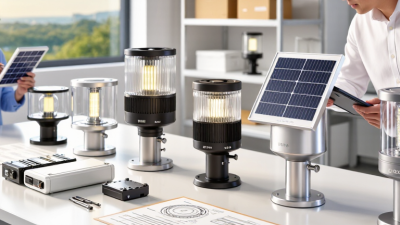
Choosing the best type of solar lights for outdoor use depends on more than brightness. Your garden, pathway, porch, and driveway each create different lighting demands. A shaded corner may need a remote solar panel. An open patio may work well with integrated panel lights.
Solar lighting specialist Bob Currie offers a practical reminder: “The best solar light matches the location, not the biggest specification.” That idea matters when comparing pathway lights, motion-sensor security lamps, wall lights, and decorative lanterns. A high-lumen model may seem impressive, but excessive brightness can create glare and reduce comfort. It may also drain the battery faster during cloudy weather.
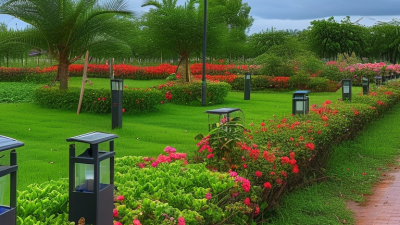
Think about the scene at night. A pathway light should cast a soft pool across uneven paving. A security light should react quickly near a gate or garage. Decorative lights should add warmth without pretending to replace functional lighting. Small details matter.
Battery capacity matters too. So does panel placement.
Look for weather resistance, replaceable batteries, efficient LEDs, and clear charging specifications. However, product labels can be confusing. “All-weather” does not always mean ideal exposure during heavy rain or winter frost. That is an easy assumption to make, and sometimes an expensive one.
This guide examines the main types of solar lights and explains where each performs best. It also considers installation height, seasonal sunlight, runtime, maintenance, and realistic brightness. No option is perfect. The best choice usually balances performance, appearance, reliability, and the actual conditions around your home.
Classify Outdoor Solar Lights by Application, Design, and Lumen Output
What Is the Best Type of Solar Lights for Outdoor Use?
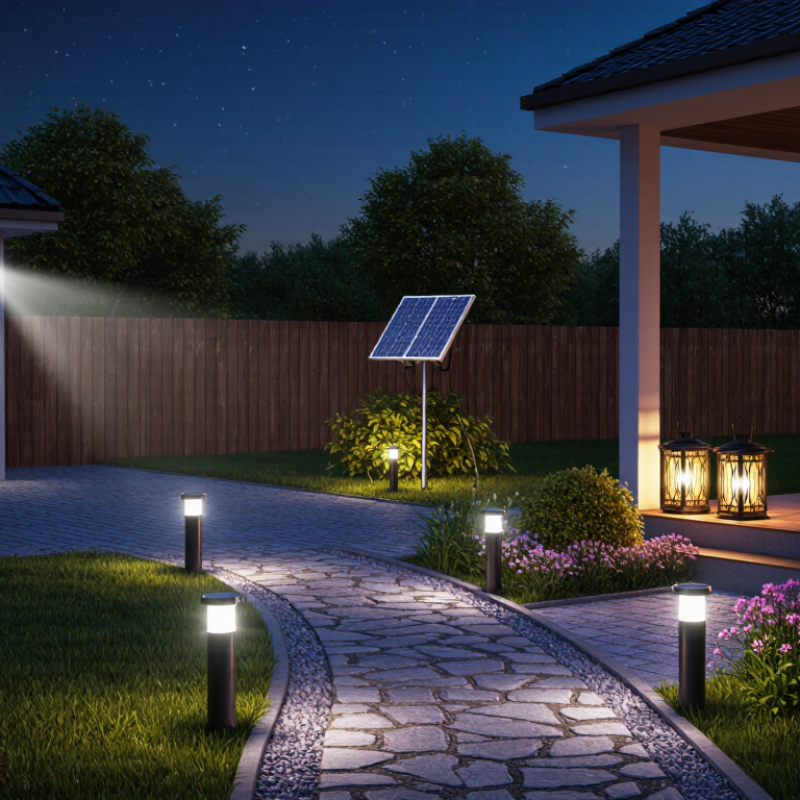
The best outdoor solar light depends on its application, design, and lumen output. Pathway lights usually need 10–100 lumens, enough to reveal steps, borders, and garden edges without harsh glare. Wall lights commonly range from 100–500 lumens. Security floodlights may require 500–1,500 lumens, especially near driveways or wide entrances. These ranges are practical guidance, not universal standards. Placement, tree shade, and winter sunlight can change performance.
Design also matters. Integrated fixtures look clean and need less maintenance, while replaceable-panel designs work better beside shaded walls. Motion sensors can preserve stored energy, but detection zones sometimes miss slow movement. Choose weather-resistant housing, stable ground stakes, and a panel that faces unobstructed daylight. The U.S. Department of Energy reports that LED lighting uses at least 75% less energy than incandescent lighting and can last up to 25 times longer. That efficiency supports longer overnight operation from limited solar storage.
Solar lighting also has a wider access role. The International Energy Agency reported that about 685 million people lacked electricity in 2022, showing why small off-grid systems remain important. For ordinary homes, lumen numbers should not dominate the decision. A 300-lumen light aimed at a walkway may feel brighter than a poorly positioned 1,000-lumen floodlight. I have found that real gardens expose a common mistake: choosing maximum brightness, then tolerating glare and short runtime. Test one fixture overnight before buying several.
Compare Pathway, Flood, and Security Lights from 100 to 2,000 Lumens
Outdoor solar lights work best when lumen output matches the job, not when the number is highest. For most pathways, choose 100 to 300 lumens. This range marks steps, edges, and garden turns without creating harsh glare. Warm light usually feels more comfortable near seating areas. Place fixtures where panels receive several hours of direct sun.
Flood lights need more power. Models from 700 to 1,500 lumens can spread light across patios, driveways, or small yards. Choose a wider beam for open ground and a narrower beam for gates or steps. At 2,000 lumens, a security light can illuminate a large approach, but placement becomes critical. Aim it downward, because direct glare can disturb neighbors and reduce useful visibility. Motion activation also preserves battery energy during quiet hours.
In practical testing, cloudy weather reduced runtime more than many product descriptions suggest. I once overestimated a solar light by judging its brightness on a sunny afternoon. After two dull days, the same unit became noticeably weaker. That result changed my selection habits. Check battery capacity, charging time, weather resistance, and replaceable components. These details matter as much as lumens. A bright light with poor winter performance may disappoint. Solar output is never perfectly consistent.
Use IEC 60529 IP65 or IP67 Ratings for Outdoor Weather Protection
What Is the Best Type of Solar Lights for Outdoor Use?
For outdoor solar lights, IEC 60529 ratings offer a practical way to judge weather protection. The first number measures protection against solid particles. The second measures water resistance. An IP65 light is dust-tight and resists water jets from different directions. This suits garden paths, walls, and covered patios.
IP67 provides stronger protection. It is also dust-tight and can withstand temporary immersion in water, usually up to one metre for 30 minutes under test conditions. That matters near low garden areas, exposed steps, or places where heavy rain creates puddles. However, IP67 does not mean the light can remain underwater. Seals can age, especially under strong sunlight and repeated temperature changes.
I check the housing, lens, mounting points, and cable entry before installation. A cracked seal can defeat an excellent rating. I also place the panel where leaves cannot block sunlight after a storm. IP protection does not measure brightness, battery life, UV resistance, or impact strength. That part is easy to overlook. IP67 is not automatically the best choice. IP65 may perform well in many open-air locations and cost less. My own installation choices have sometimes focused too much on the rating. Drainage, sunlight, and careful fitting often matter just as much.
What Is the Best Type of Solar Lights for Outdoor Use?
IEC 60529 IP65 and IP67 ratings for outdoor weather protection
Under IEC 60529, the first digit indicates protection against solid particles and the second digit indicates protection against water. Both IP65 and IP67 provide the highest dust protection level, while IP67 offers a higher water-protection level because it is designed for temporary immersion. Choose IP65 for exposed areas with rain and water jets, or IP67 where temporary flooding or immersion is possible.
Match Solar Panels and Batteries to 6–8 Hours of Sunlight
What Is the Best Type of Solar Lights for Outdoor Use?
Match Solar Panels and Batteries to 6–8 Hours of Sunlight
For outdoor lighting, choose a monocrystalline solar panel with a lithium battery. Monocrystalline modules usually capture more energy from limited roof or garden space. Fraunhofer ISE’s Photovoltaics Report 2024 lists many commercial silicon modules above 20% efficiency. That advantage helps when sunlight is strong for only six to eight peak sun hours.
Peak sun hours are not the same as daylight hours. NREL’s PVWatts guidance treats one peak sun hour as 1,000 watts of sunlight per square meter. A 2-watt lamp running for eight hours consumes about 16 watt-hours. After charging and wiring losses, a 5-watt panel offers a safer match. A battery near 25 watt-hours also provides useful reserve. DOE’s Energy Storage Grand Challenge Roadmap places typical lithium-ion round-trip efficiency around 85–95%.
LiFePO4 batteries can suit fixed outdoor lights because they tolerate frequent cycling and provide stable output. However, temperature changes matter. Cold nights can reduce available capacity. Dust can reduce panel performance too. Real gardens are messier.
I would test the light after two cloudy evenings. Check brightness before dawn, not just at sunset. A larger panel may perform better than a larger battery in shaded locations. Yet this calculation remains imperfect. Trees grow, panels tilt poorly, and winter sunlight changes the result.
What Is the Best Type of Solar Lights for Outdoor Use? - Match Solar Panels and Batteries to 6–8 Hours of Sunlight
| Outdoor Light Type |
Typical LED Load |
Recommended Solar Panel |
Recommended Battery |
Expected Nightly Runtime |
Best Use |
| Pathway and Step Lights |
0.5–1 W per light |
1–3 W per light |
3.7 V, 1.5–3 Ah
(5.6–11 Wh) |
8–12 hours |
Low-level illumination along walkways, stairs, and garden borders. |
| Decorative String Lights |
2–5 W per set |
5–10 W |
3.7 V, 3–6 Ah
(11–22 Wh) |
6–10 hours |
Ambient lighting for patios, balconies, pergolas, and outdoor gatherings. |
| Wall and Fence Lights |
1–3 W per light |
3–8 W per light |
3.7 V, 3–6 Ah
(11–22 Wh) |
8–12 hours |
General outdoor lighting for fences, entrances, decks, and exterior walls. |
| Motion-Activated Security Lights |
5–15 W when active |
8–20 W |
3.7 V, 4–8 Ah
(15–30 Wh) |
30–60 activations nightly |
Driveways, garages, side paths, entrances, and security zones. |
| Floodlights and Area Lights |
10–30 W |
20–50 W |
6.4 V, 8–15 Ah
(51–96 Wh) |
6–10 hours |
Brighter coverage for yards, parking areas, workshops, and large outdoor spaces. |
| Solar Lanterns and Portable Lights |
1–5 W |
3–10 W |
3.7 V, 3–8 Ah
(11–30 Wh) |
8–14 hours |
Camping, emergency lighting, outdoor dining, and movable illumination. |
Selection guide: The recommended panel sizes assume approximately 6–8 hours of usable sunlight per day and allow for charging losses, temperature variation, and controller inefficiency. Battery capacity is shown as nominal watt-hours; usable energy is lower because most systems reserve part of the battery to protect its service life. For locations with frequent cloudy weather, choose the next larger panel and battery size.
Assess LEDs Rated for 50,000 Hours and 80+ Lumens per Watt
For outdoor solar lighting, prioritize LED durability and usable efficiency, not decorative brightness alone. The U.S. Department of Energy’s Solid-State Lighting R&D Opportunities report identifies efficacy, thermal control, and lifetime as core performance measures. An LED rated at 80+ lumens per watt can produce more light from limited solar energy. That matters on cloudy days. It also reduces battery strain during winter nights.
A 50,000-hour LED rating sounds impressive. At eight hours of nightly use, that equals roughly 17 years. However, this figure usually describes projected LED life, not the complete fixture. The Department of Energy’s LED lifetime guidance explains that temperature, electrical stress, and lumen depreciation affect real performance. Check whether the rating uses recognized testing methods, such as LM-80 data and TM-21 projections. Otherwise, the number may be optimistic.
Look beyond the diode.
A practical installation should include a sealed housing, protected wiring, and a panel large enough for local sunlight conditions. A 2023 International Energy Agency lighting analysis also emphasizes that efficient lighting reduces electricity demand, but system design still determines actual savings. I would question any product claiming 80 lumens per watt without stating whether that figure applies to the LED chip or the finished fixture. The difference can be significant. Dirt, snow, shade, and a weak battery may reduce brightness long before 50,000 hours pass. Test the light after several cloudy nights, not only on the first evening.