
Top Street Light Suppliers for Global Buyers
Choosing the right street light supplier requires more than comparing prices or browsing polished product photos. Global buyers must examine photometric files, material quality, certifications, warranty terms, and after-sales support. A reliable supplier should explain lumen output, beam distribution, color temperature, surge protection, IP ratings, and IK ratings clearly. The details matter. A poorly sealed fixture may fail after one rainy season.
Lighting expert James R. Benya has said, “Good lighting is about seeing, not simply about brightness.” This principle remains useful when evaluating manufacturers for highways, residential streets, industrial parks, and public spaces. A powerful lamp is not automatically a better lamp. Excessive glare can reduce visual comfort, disturb nearby homes, and create unsafe contrasts between bright and dark areas.
This guide reviews top street light suppliers for global buyers through a practical, evidence-based lens. It considers product performance, manufacturing experience, customization ability, testing procedures, delivery capacity, and technical communication. It also looks beyond attractive catalogs. Can the supplier provide a realistic lighting simulation? Can its engineering team support local installation conditions? Can replacement parts remain available after several years?
No shortlist is perfect. Supplier information can change, and published performance may not reflect every project. Buyers should verify test reports, sample units, references, and regional compliance before signing a contract. A factory visit helps. So does testing one fixture in real weather.
The strongest suppliers combine dependable hardware with honest documentation. They understand that a street light is not merely a pole-mounted product. It is part of a safer, more efficient, and more comfortable public environment.
What Defines a Leading Street Light Supplier
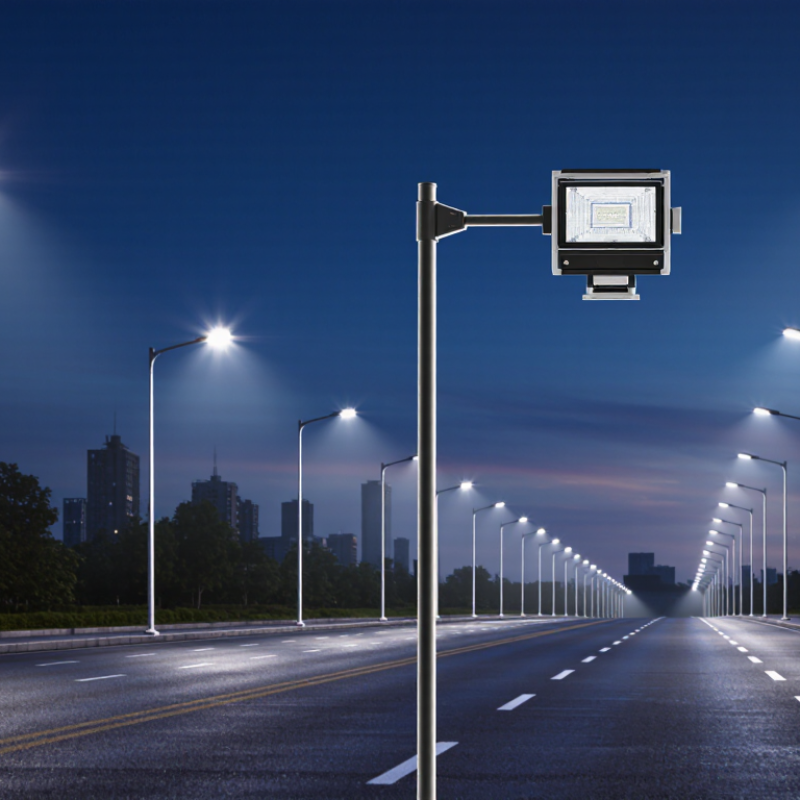
A leading street light supplier is defined by more than a large catalog. It understands roads, weather, traffic patterns, and maintenance realities. Experienced suppliers can recommend suitable wattage, beam angles, color temperatures, and mounting heights. They support decisions with photometric files, test reports, and clear performance data. Vague claims are warning signs.
Reliability appears in small details. A dependable supplier explains LED lifespan, driver quality, surge protection, ingress protection, and operating temperatures. It should provide consistent samples before mass production. Factory inspections, traceable components, and documented quality checks build confidence. Responsive technical support matters too, especially when a light flickers beside a busy road at midnight. No supplier gets every project perfect. Honest communication about limitations is more valuable than impressive promises.
Tips: Ask for a sample installation or verified lighting simulation. Check whether the supplier has handled similar climates and road conditions. Review warranty terms, spare-part availability, packaging, and delivery records. Confirm that products meet the required regional safety and energy standards. Ask difficult questions early. A supplier that avoids specific answers may create expensive problems later. Also, do not judge quality from brightness alone; excessive glare can reduce comfort and visibility. A careful supplier balances illumination, energy use, service life, and installation cost. That balance often separates a dependable partner from a temporary seller.
Main Types of Street Lighting Products and Technologies
Top Street Light Suppliers for Global Buyers
Street lighting now spans several product families. High-pressure sodium remains useful for wide roads, but its amber output weakens color recognition. Metal-halide lamps provide better color, yet they consume more power and require frequent replacement. LED luminaires offer precise optics, instant dimming, and long operating life. The U.S. Department of Energy’s 2023 Solid-State Lighting R&D Opportunities report identifies 200 lumens per watt as an important efficacy benchmark. Real products may perform lower. Thermal conditions matter.
Solar street lights combine photovoltaic panels, batteries, controllers, and LED modules. They suit remote roads, parks, and locations with costly grid connections. However, battery sizing must reflect cloudy periods, temperature, and nighttime traffic. Smart lighting adds motion sensors, wireless controls, fault alerts, and adaptive dimming. The International Energy Agency reports that efficient LED adoption can reduce lighting electricity use by up to 75% compared with traditional incandescent technology. Street projects still need careful photometric checks. A bright fixture can create glare instead of safety.
Tips: Request LM-80 and TM-21 data for LED depreciation. Check IP and IK ratings for rain, dust, and impact. Ask for a complete lighting calculation, not only wattage. Compare uniformity, glare, color temperature, battery autonomy, and maintenance access. Do not trust optimistic lifetime claims without operating temperature data. Test a small road section first; laboratory results can miss local weather, mounting height, and driver behavior.
| Product Type | Typical Installation | Light Source | Typical System Power | Typical Efficacy | Common CCT | Key Technologies and Features | Typical Protection and Applications |
|---|---|---|---|---|---|---|---|
| Roadway LED Luminaire | Side-entry or post-top mounting on 6–12 m poles | High-power white LEDs with an aluminum heat sink | 30–240 W | 120–190 lm/W | 2700–4000 K | Asymmetric optics Zhaga or NEMA receptacle DALI-2 / 0–10 V dimming | Commonly IP66 and IK08–IK10; urban roads, highways, intersections and residential streets |
| Solar LED Street Light | Standalone installation on 5–10 m poles | LED module powered by photovoltaic panels and batteries | 20–150 W LED load | 110–180 lm/W for the LED module | 3000–6500 K | MPPT charge controller Lithium battery Dusk-to-dawn control Motion dimming | Usually IP65 or higher; remote roads, parks, villages and areas with limited grid access |
| Decorative Post-Top Luminaire | Post-top or short-arm mounting on 3–8 m poles | Integrated LED board or replaceable LED module | 20–120 W | 90–160 lm/W | 2700–4000 K | Decorative housing Symmetric or wide distribution Low-glare diffuser | Typically IP65–IP66 and IK08; boulevards, town centers, campuses and historic districts |
| LED Bollard Light | Ground-mounted at pedestrian height, generally 0.6–1.2 m | Low-power LED module | 5–30 W | 70–130 lm/W | 2700–4000 K | Shielded optics Low-glare design Optional occupancy sensor | Commonly IP54–IP65 and IK07–IK10; pathways, parks, pedestrian zones and residential developments |
| LED Floodlight for Roads and Public Areas | Mounted on brackets, walls, gantries or high poles | High-output LED array | 50–600 W | 110–170 lm/W | 3000–5700 K | Narrow to wide beam angles Adjustable bracket Surge protection | Often IP66 and IK08–IK10; plazas, large junctions, parking areas and transport facilities |
| LED Tunnel Luminaire | Continuous rows or brackets inside tunnel zones | High-output LED modules | 60–500 W | 100–170 lm/W | 3000–5700 K | Counter-beam optics Through-wiring Stepped lighting control | Typically IP66–IP67 and IK08–IK10; entrance, transition, interior and exit tunnel zones |
| High-Mast LED Luminaire | Installed on 15–40 m high masts | Multiple LED modules with optimized lenses | 300–2000 W per luminaire | 120–180 lm/W | 4000–5700 K | High-output optics Modular maintenance Remote monitoring option | Commonly IP66 and IK08–IK10; ports, airports, interchanges, logistics yards and sports areas |
| Smart Connected Street Light | Standard roadway or decorative poles with a control node | LED luminaire with wireless or wired controller | 30–240 W | 110–190 lm/W | 2700–4000 K | NEMA or Zhaga interface Remote dimming Fault alerts Energy metering | Usually IP66 for the luminaire; connected urban networks, adaptive lighting and energy-management projects |
| Hybrid Solar-Grid Street Light | Pole-mounted system with solar panel and grid connection | LED module with photovoltaic and mains power inputs | 30–180 W LED load | 110–180 lm/W for the LED module | 3000–5700 K | Automatic source switching Battery backup Remote status monitoring | Generally IP65 or higher; locations requiring resilience, lower grid consumption or backup lighting |
Note: Performance values are typical market ranges for current LED street-lighting systems. Actual power, efficacy, optical distribution, protection rating and operating life depend on the luminaire design, ambient conditions, photometric requirements and applicable regional standards.
Key Criteria for Comparing Global Street Light Suppliers
Top Street Light Suppliers for Global Buyers
Key Criteria for Comparing Global Street Light Suppliers
A dependable supplier should provide more than attractive product photos. Ask for photometric files, tested lumen output, power factor, and lifetime data. These details help engineers model road coverage before placing a large order. I would also request a sample. A sample reveals glare, housing quality, cable sealing, and real-world color consistency.
Weather protection deserves careful attention. Check IP and IK ratings, operating temperature ranges, surge protection, and corrosion resistance. Coastal roads may require different materials than dry inland highways. Verify certificates through accredited laboratories instead of relying on scanned documents alone. Small paperwork gaps can create costly delays during customs clearance or municipal approval.
Compare the supplier’s production experience, not only its factory size. Review quality-control records, component traceability, batch testing, and inspection procedures. A clear warranty should define coverage, exclusions, replacement timing, and shipping responsibility. Ask whether spare drivers and lenses remain available after several years. That question is often overlooked.
Delivery reliability also matters. Request a realistic lead-time schedule, packaging photographs, and loading inspections. Confirm minimum order quantities and payment stages before signing. Some suppliers communicate well during sales but respond slowly after delivery. That is a warning sign. No supplier is perfect. Even experienced buyers can underestimate installation conditions, maintenance access, or local voltage fluctuations. Comparing these practical details usually produces a safer purchasing decision than choosing by unit price alone.
Manufacturing, Certification, and Quality Assurance Standards
Top Street Light Suppliers for Global Buyers
Reliable street light suppliers begin with controlled manufacturing, not polished product photos. A documented ISO 9001 quality system should guide purchasing, assembly, inspection, and corrective actions. Production teams should record LED batches, driver models, soldering temperatures, and housing materials. This traceability helps buyers investigate failures months after delivery. It also exposes weak process control.
Certification must match the destination market. Street lights commonly require IEC 60598 safety testing, electromagnetic compatibility checks, and suitable IP and IK ratings. For outdoor projects, buyers should review photometric reports, surge protection data, thermal testing, and electrical safety results. Independent laboratories add credibility when reports include model numbers, test dates, and laboratory accreditation. A CE mark alone may not answer every regional requirement. Ask for complete documents.
Quality assurance should continue beyond final assembly. Incoming components need sampling inspections for dimensions, power ratings, and visible defects. Finished units can undergo insulation tests, light distribution checks, and aging tests lasting several hours. Inspectors should verify color temperature, power factor, lumen output, and dimming response against approved samples. Packaging deserves attention too. Moisture barriers and corner protection prevent avoidable damage during sea transport.
No factory is flawless. Suppliers that share nonconformity records often appear more trustworthy than those promising perfection. Buyers should audit calibration certificates, factory capacity, worker training, and warranty procedures. Small pilot orders reveal more than impressive presentations. A supplier may pass certification yet still struggle with consistency between batches. That gap deserves careful questioning.
Top Street Light Suppliers for Global Buyers: Manufacturing, Certification, and Quality Assurance Standards
This chart summarizes key reference levels commonly used when evaluating outdoor LED street-light suppliers. IP65 indicates dust-tight protection and protection against water jets, while IK08 represents resistance to an impact energy of 5 joules. The performance benchmark of 120 lm/W reflects a commonly targeted minimum system efficacy for modern LED street-light procurement. These values are reference points rather than universal legal requirements; buyers should verify project-specific specifications, test reports, and certificates.
How to Select the Right Supplier for an International Project
Top Street Light Suppliers for Global Buyers
How to Select the Right Supplier for an International Project
Choosing a street light supplier requires more than comparing unit prices. Start by checking compliance with the destination country’s electrical and lighting standards. Request test reports, photometric files, ingress protection ratings, and surge protection data. These documents should match the proposed model, not a similar product. A small mismatch can create serious approval delays.
Ask for a sample before approving a large order. Test its beam distribution, color temperature, power consumption, and housing finish. For coastal projects, request salt-spray evidence and corrosion-resistant materials. Review the supplier’s production capacity, quality inspection process, and packaging method. Factory photos help, but an independent audit offers stronger evidence. I would not trust a polished factory tour alone.
International projects also depend on communication after shipment. Confirm warranty terms, spare-part availability, installation guidance, and response times in writing. Check whether the supplier can handle customs documents and staggered delivery schedules. A low price may hide expensive delays. I have seen planning assumptions fail when local technicians received unclear wiring instructions. That mistake is avoidable. Still, even a careful evaluation can miss problems, so a small pilot installation is worth the extra cost.
Related Posts
-
Global Street Light Market Outlook and Trends for the Next Decade
-
How to Choose the Right Street Light for Your Urban Environment
-
Top 10 Types of Solar Street Lights for Global Buyers
-

Top 10 Solar-Powered Light Manufacturers from China at the 137th Canton Fair
-
China Best Solar Lamp Supplier for Global Buyers
-

How to Choose the Right LED Street Lights for Your Urban Environment