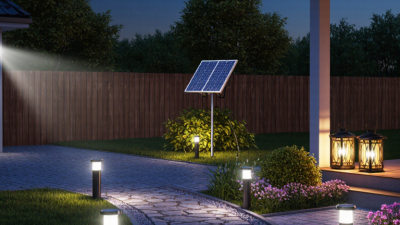
China Top 10 Solar Lights Manufacturers for Global Buyers?
Choosing reliable solar lights manufacturers in China requires more than comparing catalog prices. Global buyers must examine product design, factory capability, quality controls, and after-sales support. A bright product photo proves very little. Battery capacity, panel efficiency, charging time, waterproof protection, and light performance matter in real outdoor conditions.
This guide introduces ten leading Chinese manufacturers for international procurement projects. The selection considers manufacturing experience, product range, export familiarity, certifications, sample quality, and communication standards. It also highlights practical details, including minimum order quantities, customization options, packaging strength, warranty terms, and inspection support. Buyers can compare garden lights, streetlights, floodlights, pathway lamps, and commercial systems more confidently.
Conditions vary by region.
A coastal project may need stronger corrosion resistance. A rural installation may depend on long battery endurance and simple maintenance. Manufacturers with suitable IP ratings and tested components can reduce replacement risks. However, no ranking remains permanently accurate. Company capabilities, certifications, prices, and production schedules can change. Public information may also be incomplete, which deserves careful checking.
The recommendations should support further research, not replace it. Request recent test reports, factory videos, product samples, and written specifications before placing an order. Independent inspections can reveal details that online listings overlook. With a practical evaluation process, global buyers can identify solar lights suppliers that balance performance, compliance, customization, and long-term reliability.
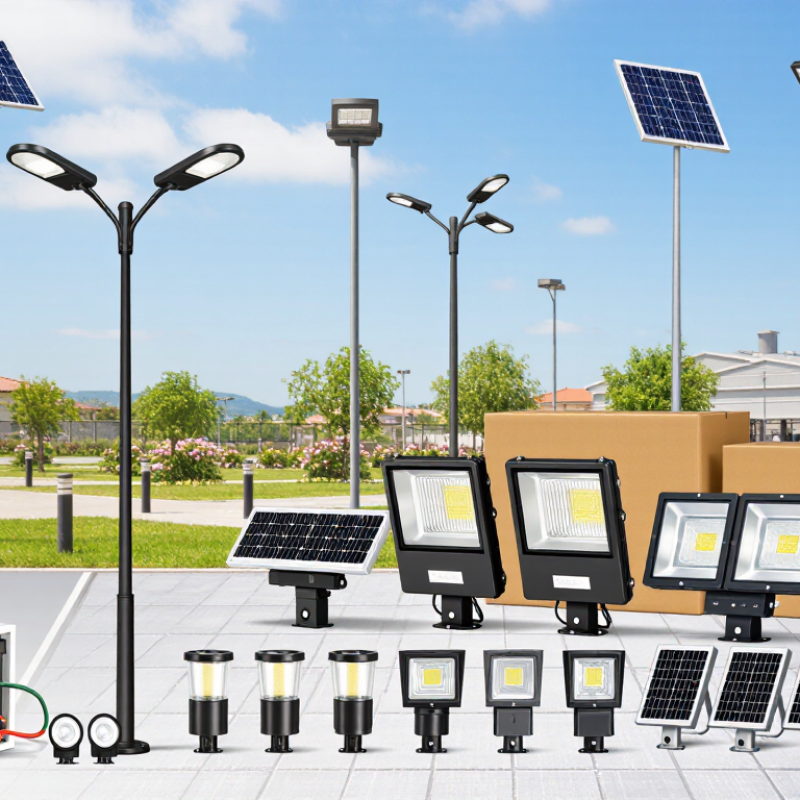
How to Evaluate China’s Top Solar Light Manufacturers
Choosing China’s top solar light manufacturers requires more than comparing catalog photos and factory prices. A reliable evaluation begins with product evidence. Request samples that match the proposed production model. Test brightness outdoors after several cloudy days. Check the battery capacity, charging time, working hours, and panel performance. IP ratings should be supported by proper test documents, not only printed on packaging. Ask for material details, temperature ranges, and aging results.
Factory capability matters too. Review production lines, quality-control procedures, and worker training. A useful audit should examine incoming materials, assembly checks, waterproof testing, and final inspections. Ask whether the manufacturer can provide traceable batch records. Confirm certifications for your target market and verify their issuing laboratories. Strong suppliers explain technical limits clearly. Be careful with promises of “lifetime” performance. They are usually too simple.
Tips: Compare at least three suppliers using the same checklist. Request a pilot order before large production. Measure light output, not just visual brightness. Confirm warranty terms, spare parts, packaging strength, and response times in writing. A video factory tour helps, but it cannot replace an independent inspection. No process is perfect. Even experienced buyers can overlook battery degradation or seasonal sunlight changes. A realistic forecast should include cloudy weeks, shipping delays, and installation mistakes. That extra caution often separates a dependable supplier from an attractive quotation.
China’s Top 10 Solar Light Manufacturers by Product Category
Global buyers often evaluate Chinese solar-light suppliers by product specialization, not catalog size. The ten key categories include pathway lights, wall lights, floodlights, streetlights, garden bollards, security lights, decorative lanterns, camping lamps, sign lights, and industrial area lights. Each category requires different design choices. Streetlight manufacturers focus on pole strength, optical distribution, battery capacity, and remote monitoring. Floodlight producers usually prioritize lumen stability, motion sensors, and weather-resistant housings. Small garden-light factories may excel at appearance, but winter performance can vary.
In practical sourcing work, I request sample test records, panel specifications, battery chemistry, charging time, and usable lighting hours. A clear datasheet matters. I also inspect seals, cable entry points, screws, and controller protection. An IP rating should match the installation environment, not merely decorate the brochure. Public-project buyers should verify photometric files, factory quality systems, and destination-market safety requirements. Independent testing becomes valuable when order volumes are large.
Category specialists can offer better tooling, replacement parts, and technical adjustments. However, specialization does not guarantee consistency. A bright sample may use a larger battery than the production model. Ask for pre-shipment inspection and retain approved samples. Weak points often appear after cloudy weather, repeated rain, or freezing nights. I have seen attractive quotations fail because packaging protected the lamp poorly. That lesson is easy to overlook. Compare measured performance, documentation, and after-sales response, not only unit price.
China Top 10 Solar Lights Manufacturers for Global Buyers? - China’s Top 10 Solar Light Manufacturers by Product Category
Category-based comparison of commonly manufactured solar lighting products for international buyers. Technical ranges are typical specification bands and should be confirmed through product datasheets and testing reports.
| No. | Product Category | Typical Applications | Common LED Power Range | Typical Solar Panel | Common Battery Type | Typical Autonomy | Typical Protection Rating | Key Buyer Verification Points |
|---|---|---|---|---|---|---|---|---|
| 01 | All-in-One Solar Street Lights | Urban roads, residential streets, parking areas and public pathways | 20–150 W LED equivalent | Monocrystalline silicon, usually 50–250 Wp | LiFePO4 lithium battery | 2–5 nights at reduced lighting output | IP65–IP66; IK08–IK10 | Verify lighting distribution, battery cycle life, controller efficiency, temperature range and photometric test reports. |
| 02 | Split-Type Solar Street Lights | Highway shoulders, rural roads, larger public projects and areas requiring flexible panel positioning | 30–200 W LED equivalent | Monocrystalline silicon, usually 80–350 Wp | LiFePO4 or sealed lead-acid | 2–7 nights, depending on configuration | IP65–IP67; IK08 or higher | Check cable protection, pole-mount compatibility, battery enclosure ventilation and independent panel orientation. |
| 03 | Solar Floodlights | Building facades, yards, construction sites, farms and perimeter security | 10–100 W LED equivalent | Monocrystalline silicon, usually 10–120 Wp | LiFePO4 or lithium-ion | 1–3 nights | IP65–IP66; IK07–IK10 | Confirm beam angle, motion-sensor range, remote-control functions, charging time and mounting hardware. |
| 04 | Solar Garden and Landscape Lights | Gardens, parks, walkways, resorts and residential landscaping | 0.5–10 W LED equivalent | Small monocrystalline or polycrystalline panel, usually 1–15 Wp | Ni-MH or lithium-ion | 8–12 hours per night | IP44–IP65 | Review light distribution, ground-spike strength, UV resistance, decorative finish and seasonal charging performance. |
| 05 | Solar Bollard Lights | Pedestrian paths, parks, hotel grounds, campuses and driveways | 1–15 W LED equivalent | Integrated panel, usually 2–25 Wp | LiFePO4, lithium-ion or Ni-MH | 1–3 nights | IP54–IP65; IK06–IK10 | Check foundation method, pole material, corrosion resistance, glare control and access for battery replacement. |
| 06 | Solar Wall and Security Lights | Entrances, garages, warehouses, fences and residential security lighting | 2–30 W LED equivalent | Integrated or remote panel, usually 3–35 Wp | LiFePO4 or lithium-ion | 1–3 nights | IP44–IP65 | Verify motion detection angle, sensing distance, standby consumption, wall anchors and outdoor temperature rating. |
| 07 | Solar Traffic and Warning Lights | Road hazards, pedestrian crossings, construction zones and temporary traffic control | 1–20 W LED equivalent | Monocrystalline silicon, usually 5–50 Wp | LiFePO4 or sealed lead-acid | 3–10 days in flashing mode | IP65–IP67 | Confirm flash frequency, visibility distance, lens color, controller programming and applicable traffic regulations. |
| 08 | Solar Underwater and Pool Lights | Ponds, fountains, water features and decorative outdoor installations | 1–12 W LED equivalent | Separate panel, commonly 5–30 Wp | Rechargeable lithium-ion or Ni-MH | 6–10 hours per night | IP68 for submersible lamp assemblies | Check cable sealing, immersion depth, low-voltage safety, material corrosion resistance and water-ingress testing. |
| 09 | Solar Lanterns and Portable Lights | Emergency lighting, camping, disaster relief and off-grid household use | 0.5–10 W LED equivalent | Built-in or detachable panel, usually 1–10 Wp | LiFePO4, lithium-ion or Ni-MH | 6–50 hours, depending on brightness mode | IPX4–IP65 | Review USB output, battery capacity, charging indicators, drop resistance, handle strength and transport documentation. |
| 10 | Solar Sign, Billboard and Display Lights | Road signs, advertising boards, directional signs and remote displays | 5–80 W LED equivalent | Monocrystalline silicon, usually 20–160 Wp | LiFePO4 or sealed lead-acid | 2–5 nights | IP65–IP66 | Confirm illumination uniformity, adjustable brackets, battery sizing, timer settings and resistance to wind and corrosion. |
Key Technologies and Quality Standards for Solar Lighting
For global buyers comparing China’s solar light manufacturers, technology matters more than attractive lumen claims. A reliable unit starts with a correctly sized photovoltaic panel, not an oversized battery. MPPT charging can improve energy harvest during weak sunlight, while LiFePO4 cells usually support safer cycling and longer service life. The controller should provide temperature monitoring, low-voltage protection, and charging fault records. Small details matter. A loose cable gland can defeat an excellent circuit.
Quality assessment should follow recognized standards and traceable testing. Ask for reports covering IEC 60598-1 for luminaire safety, IEC 62133-2 for rechargeable battery safety, and IEC 62471 for photobiological risk. IP65 or IP66 testing, based on IEC 60529, helps verify dust and water protection. Installation angle still matters. For LED performance, request measured photometry instead of marketing lumens. Reports based on IES LM-79 methods can show output, color temperature, and power under defined conditions. Certificates can expire.
Field reliability needs more than a laboratory sample. Test several units. Use cloudy weeks, repeated on-off cycles, and hot afternoon charging. Check ground-level illuminance, battery temperature, corrosion, and motion-sensor response. Field reviews often reveal products that dim before dawn. Weak winter sizing caused the problem, not defective LEDs. Manufacturers should provide salt-spray evidence for coastal projects, clear replacement procedures, and consistent batch records. Some specifications look precise but hide assumptions about sunlight, load, and operating hours.
Comparing Pricing, Customization, and Production Capacity
China Top 10 Solar Lights Manufacturers for Global Buyers?
Pricing, customization, and production capacity reveal more than a factory’s product photos. In 2023, global solar photovoltaic additions reached about 447 GW, according to the International Energy Agency. This growth supports larger component supply, but it does not guarantee consistent lighting quality.
For basic outdoor lamps, indicative FOB pricing often ranges from 8 to 35 US dollars. Higher costs usually reflect larger batteries, aluminum housings, motion sensors, and longer warranties. Cheap quotes can hide weaker cells or limited night-time testing.
Customization separates experienced exporters from assembly workshops. Serious manufacturers should provide lumen tests, battery-cycle records, ingress ratings, and sample approval before mass production. A practical request might include a 60-watt street light, 6,000-lumen output, remote monitoring, and a 12-hour backup target. That specification needs local solar data, not guesswork.
The World Bank’s Lighting Global quality framework also stresses verified performance, durability, and consumer protection for off-grid lighting products.
Capacity must be checked through evidence. Ask for monthly output by model, automated aging-test photographs, and recent shipment records. A facility claiming 100,000 units monthly may still lack enough battery cells during peak season. Production is not the same as dependable capacity.
In my sourcing experience, a mid-sized factory with disciplined inspection can outperform a larger supplier with unstable subcontracting. That is an uncomfortable comparison. Request pilot batches, inspect random cartons, and compare delivered cost after replacements, freight, and warranty claims.
How Global Buyers Can Select and Import a Reliable Supplier
Selecting a reliable solar light supplier in China requires more than comparing unit prices. Global buyers should verify factory experience, production capacity, and quality controls before discussing large orders. Request business documents, product specifications, test reports, and clear export records. A polished catalog is not proof.
Ask for samples from the proposed production line. Test charging time, lighting duration, battery recovery, and performance after several cloudy days. Check the housing, cable seals, screws, and solar panel surface. IP ratings should match the intended installation environment. Confirm whether the stated lumen output comes from measured testing or simple marketing language. Small details matter.
A factory audit can reveal useful facts: material storage, aging-test areas, calibration records, and worker inspection steps. Buyers should also clarify minimum order quantities, packaging strength, spare parts, lead times, payment terms, and shipping responsibilities. Use a written specification sheet with photos and measurable tolerances. Independent pre-shipment inspection is worth considering, especially for first orders. It may feel expensive.
Import planning needs equal attention. Confirm the correct product classification, destination requirements, labeling rules, battery transport documents, and warranty process with qualified local professionals. Do not rely on a supplier’s verbal assurance alone. An experienced sourcing team can compare quotations, but even experienced teams miss details. A sample may pass while a bulk batch changes. Keep approval samples, inspection records, and communication in one traceable file. Reliable cooperation is built through evidence, not promises.
Related Posts
-
What Is the Best Type of Solar Lights for Outdoor Use?
-
China Best Solar Lamp Supplier for Global Buyers
-
Exquisite Chinese Craftsmanship in Best Solar Lights for Global Buyers
-
How to Choose the Best Solar Powered Lights for Your Outdoor Space
-
15 Ways Outdoor Solar Lights Enhance Sustainability and Save Energy Globally
-
Top 10 Solar Lights in 2025 for Efficient Outdoor Illumination