Who Are the Top Outdoor Solar Lights Suppliers in China?
China has become a major sourcing destination for outdoor solar lights, but choosing a supplier takes more than comparing catalog prices. Buyers must look closely at battery capacity, panel output, LED performance, weather sealing, and replacement-part support. A lamp may look convincing in a product photo. Its performance on a dim, rainy path is what matters.
Energy expert Amory Lovins has said, “Efficiency is the end-use equivalent of a new energy supply.” That principle applies to outdoor solar lights: thoughtful design can make limited stored energy go further. Yet efficiency figures alone do not tell the whole story. Ask suppliers how they test runtime, charging, and durability, and request clear product specifications. Details matter.
This guide explores leading Chinese suppliers and the strengths they bring, from established manufacturing capacity to specialized product ranges. It also considers practical questions buyers should ask before placing an order, including customization, quality control, and after-sales service. Supplier capabilities can vary by model and production run, so a polished website is not proof of consistent performance. Not always. Treat rankings as a starting point, verify claims with samples and documentation, and match each supplier to the installation’s real conditions. A garden pathway, parking area, and remote sign may need very different light output and operating schedules. The right partner is not simply the one offering the lowest quote; it is the one able to explain trade-offs plainly and support the product after delivery.
Overview of China's Outdoor Solar Lighting Industry
China’s outdoor solar lighting industry serves gardens, roads, parking areas, farms, and public spaces. Its supply chain brings together solar panels, batteries, LED modules, controllers, housings, and assembly. Many suppliers offer both standard fixtures and customized designs, but product capability varies widely.
A reliable assessment starts with the working conditions. A light beside a coastal walkway faces salt spray; one on a rural lane may receive little winter sunlight. Buyers should compare panel output, battery chemistry, rated operating time, and protection against water and dust. Small details matter. A bright first hour means little if the lamp dims before dawn. Ask how performance is tested across cloudy periods, not only under ideal conditions.
China’s manufacturing base can support prototyping and larger production runs, yet a polished sample does not prove consistent output. Request inspection records, component specifications, and clear warranty terms. Check whether replacement batteries or controllers can be sourced later. Even careful testing has limits: real weather, shading, and installation quality can change results. That uncertainty deserves attention. Choosing a supplier means evaluating the product and the evidence behind its claims.
China’s Outdoor Solar Lighting Industry: Market Context
China’s expanding solar power base provides important context for the supply chain behind outdoor solar lighting. The chart shows the country’s cumulative installed solar photovoltaic capacity; it is an industry context indicator, not a measure of outdoor lighting sales.
Source: China National Energy Administration (NEA), year-end installed solar power capacity. Values are in gigawatts (GW).
Main Types of Outdoor Solar Lights Made in China
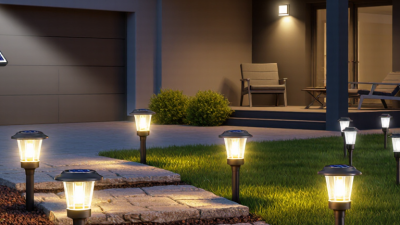
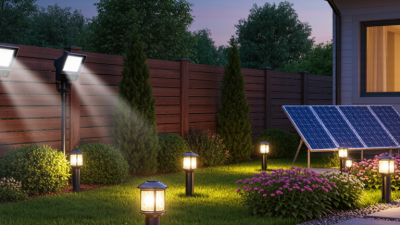
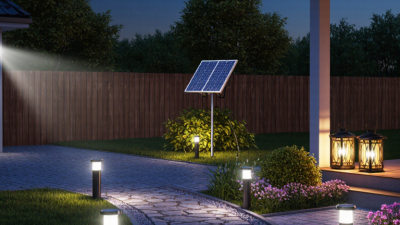
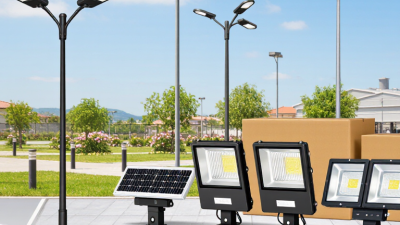
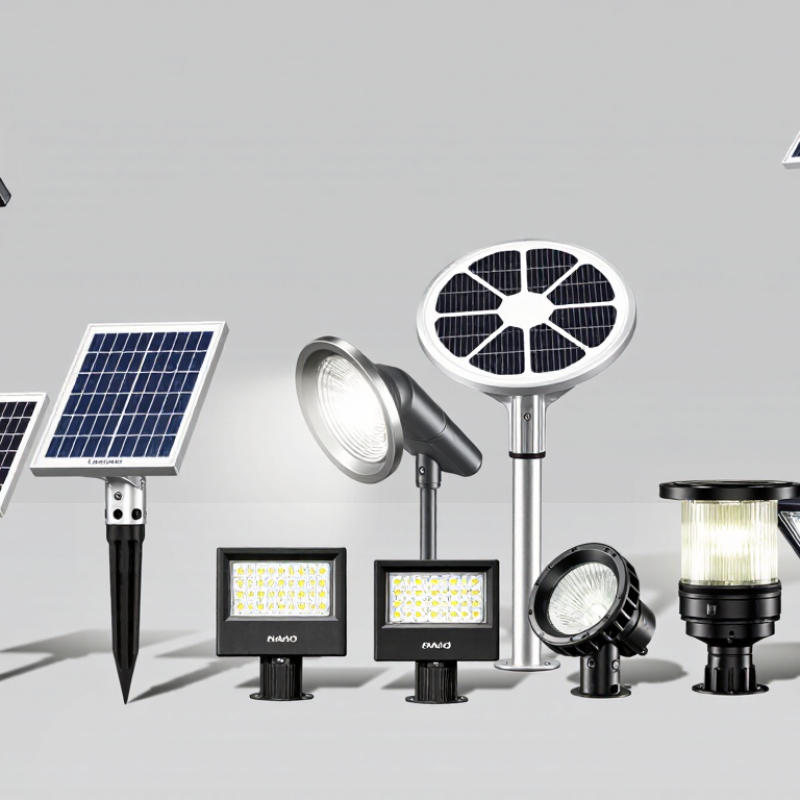
Outdoor solar lights made in China fall into several practical categories. Pathway and garden lights use compact panels, small batteries, and low-mounted LEDs to mark steps, beds, and walkways. Wall-mounted and motion-sensor lights suit entrances and side passages, where a short burst of brighter light often matters more than all-night output. Floodlights cover gates or work areas; solar streetlights use larger panels, batteries, and poles for roads and public spaces. Different jobs, different hardware.
The scale of solar power is growing, but it does not prove that every outdoor lamp performs well. IRENA’s Renewable Capacity Statistics 2024 reports 1,419 GW of global solar PV capacity at the end of 2023, with 346 GW added that year. This is useful context, not a lighting-market sales figure. For buyers, check panel wattage, battery capacity, rated operating hours, and the test conditions behind any runtime claim. A shaded wall can change the result sharply.
Portable solar lanterns and stake lights are also common, especially for temporary areas and small gardens. Look for sealed cable entries, corrosion-resistant fasteners, and replaceable batteries where available. Small details matter. A high lumen rating alone can mislead: beam shape and mounting height determine whether the path is actually visible. Even well-specified products may need seasonal adjustment; winter sunlight is a real limitation, not a minor footnote.
Leading Outdoor Solar Light Suppliers in China
Leading outdoor solar light suppliers in China differ in how carefully they match products to real sites. A dependable supplier should explain panel output, battery capacity, LED performance, and expected runtime in plain terms. Ask how ratings were tested, and request reports for water resistance, temperature cycling, and charging performance. Numbers alone can mislead. A light that runs through a mild evening may behave differently after cloudy days or in winter.
Tips: Share site photos, mounting height, and nightly operating hours before requesting a quotation. Ask for a sample, then test it outdoors for several nights. Check charging at dawn. Small details matter.
When comparing suppliers, review drawings, installation guidance, spare-part availability, and warranty terms alongside price. Confirm whether the quoted runtime assumes full sun and reduced brightness; those assumptions should be stated clearly. A thoughtful supplier will ask about shade, pole spacing, and local weather rather than recommend one standard model. I would still verify claims independently: product sheets can omit inconvenient conditions, and sample tests cannot represent every season. Clear communication and traceable test records make supplier selection more reliable, though no checklist removes every project risk.
How to Evaluate Chinese Solar Light Suppliers
Evaluating a Chinese outdoor solar-light supplier starts with evidence, not catalogue brightness. Request a production sample and measure its panel output, charging time, and overnight runtime. Repeat the test after cloudy-day charging. A single sunny afternoon proves little. Check that test reports identify the exact model and battery configuration you plan to order.
Durability needs specific proof. Ask for ingress-protection test results under IEC 60529, plus battery cycle-life data and operating-temperature limits. NREL’s 2013 review of nearly 2,000 photovoltaic degradation rates reported a median rate near 0.5% per year. That figure concerns PV systems, not complete lamps, but it supports asking how suppliers verify panel longevity. Compare warranty terms with the stated test conditions. A polished certificate may not cover your exact product. Still, verify each batch.
Traceability matters as much as performance. IEA PVPS estimated that global solar PV additions reached about 447 GW in 2023, reflecting a fast-growing supply chain. Ask suppliers to document component origins, incoming inspections, and production-batch records. Request a bill of materials and written change-control process; otherwise, a replacement battery or panel may quietly alter performance. A factory audit helps, but it cannot replace testing samples from the shipment. That part is easy to overlook.
Key Sourcing and Quality Considerations
For outdoor solar lights, supplier selection should begin with clear performance requirements, not catalogue photos. Ask for the battery type, rated capacity, solar panel output, charging time, and expected runtime after a full charge. Test samples outdoors through cloudy days and cool nights. A single sunny-day test proves little.
Check whether the stated ingress protection rating applies to the complete assembled light, including seals and cable entries. Request relevant test reports, then confirm they match the exact model and configuration being quoted. Inspect sample units for loose wiring, uneven seals, and water trapped behind the lens. Small details matter. A polished sample may not represent every production batch, so ask how incoming components and finished units are inspected.
Compare suppliers on production capacity, lead times, minimum order quantities, spare parts, and warranty handling. Ask for written answers about battery replacement and performance claims; vague replies deserve follow-up. A factory visit or independent inspection can reveal useful process details, though neither guarantees consistent quality. This is easy to overlook: packaging and transport can also damage panels or housings. Agree on packing standards and a pre-shipment inspection plan before placing a large order. It takes extra time, but it can prevent expensive surprises.